
Indiana winters are no joke. Between the freeze-thaw cycles, heavy snowfall, and de-icing chemicals, commercial parking lots in the state take a serious beating every year. The good news? Most of the damage is preventable.
Whether you manage a retail center, office complex, or industrial facility in Indianapolis, a consistent parking lot maintenance routine is one of the smartest investments you can make. Not only does it extend the life of your pavement, but it also reduces long-term repair costs and protects your business from liability. This guide covers everything you need to know—from seasonal care and common problem areas to essential maintenance tasks and budgeting strategies.
How Indiana’s Climate Affects Your Parking Lot
Central Indiana sits in a climate zone where winter temperatures regularly oscillate around the freezing point. Unlike states farther north, where the ground stays frozen for weeks at a time, Indianapolis and surrounding communities experience repeated freeze-thaw cycles throughout the winter season—often dozens between November and March alone.
Here’s why that matters. When water seeps into small cracks in your asphalt and freezes overnight, it expands by roughly 9%, pushing outward against the surrounding pavement. When temperatures rise above freezing the following afternoon, that ice melts and leaves a slightly larger void behind. Repeat this process dozens of times in a single season, and what started as a hairline crack can become a gaping pothole by spring.
Indiana’s clay-heavy soils make the problem worse. Clay retains moisture and drains poorly, meaning water lingers in the subgrade longer than it would in sandier soils. When that trapped moisture freezes, the heaving and base disruption can be significant.
Seasonal Parking Lot Care in Indiana
Spring: Assess the Damage
Spring is the most critical time to inspect your lot. As temperatures stabilize above 50°F—typically from April through June—you’ll get a clear picture of the damage winter left behind. Look for new cracks, potholes, heaving, and any areas where water is pooling due to grade changes or blocked drains.
Spring is also the ideal window for pothole repair and crack filling, since warm, dry conditions allow asphalt products to cure properly. Don’t wait too long. Potholes and open cracks allow water to infiltrate the base layers, setting up another cycle of damage next winter.
Summer: UV Protection and Maintenance
Summer heat brings its own set of challenges. Prolonged UV exposure oxidizes the asphalt binder, causing it to dry out, fade, and become brittle over time. This is the best season for sealcoating, which protects the surface from UV rays, fuel spills, and moisture.
Summer is also a good time to address line striping. Faded markings create confusion for drivers and pedestrians, and in high-traffic lots, they can create real safety hazards.
Fall: Prepare for the Freeze
Fall is your last chance to seal cracks before the first hard freeze. Professional crack sealing is most effective when performed between September and November. At that point, a hot-pour rubberized sealant can be applied into the cracks to flex with the pavement through temperature changes and block water entry throughout winter.
Check your drainage system during fall inspections, too. Clear catch basins and repair any low spots where water tends to pool. Water that drains off your pavement quickly cannot freeze inside it.
Winter: Smart Snow Management
Snowplows and de-icing chemicals are hard on asphalt. Plow blades set too low can scrape and damage pavement surfaces, while salts and de-icers—though necessary—increase the frequency of freeze-thaw cycles by repeatedly lowering and raising the melting point of surface water. Use de-icers sparingly and opt for less aggressive products where possible. Rubber-tipped plow blades help reduce surface damage.
Common Parking Lot Problems in Indiana
Potholes and Cracking
Potholes are the most visible—and dangerous—result of freeze-thaw damage. Pothole season in Indiana typically peaks in late February and March, when months of accumulated freeze-thaw cycles combine with early spring rainfall. Surface cracking, including alligator cracking (the interconnected, scaly pattern that signals base failure), is equally common and tends to worsen rapidly if left unaddressed.
Asphalt Oxidation and Fading
Over time, sun and weather exposure causes asphalt to lose its deep black color and become gray and brittle. This oxidation is a sign the binder is degrading, making the surface more vulnerable to cracking and water infiltration. Regular sealcoating is the most effective way to slow this process.
Poor Water Drainage
Standing water is one of the leading causes of premature pavement failure. If your lot has low spots, blocked drains, or insufficient grading, water has more time to penetrate the surface and weaken the base. A drainage assessment twice a year—once in spring and once in fall—can catch problems before they escalate.
Faded Line Markings
Faded striping, worn crosswalks, and unclear directional markings aren’t just cosmetic issues. They create safety risks for drivers and pedestrians and can create ADA compliance concerns. Line striping should be refreshed regularly, ideally alongside sealcoating projects.
Essential Parking Lot Maintenance Tasks
Regular Sweeping and Debris Removal
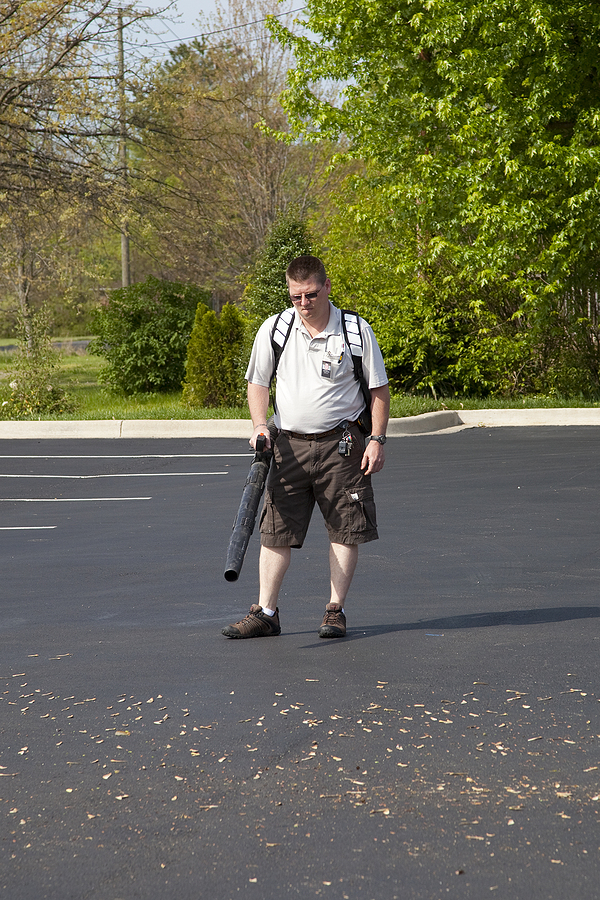
Routine sweeping keeps dirt, debris, and organic material from accumulating on the surface. Decomposing leaves and mulch retain moisture against the pavement, accelerating deterioration. A clean lot also gives you a clearer view of emerging crack patterns and damage.
Crack Sealing
Crack sealing is one of the highest-return maintenance activities available. Sealing cracks early stops water from reaching the base layers, preventing the progressive damage that makes repairs exponentially more expensive. A small crack today is a pothole next spring if left unsealed.
Sealcoating
Sealcoating creates a waterproof barrier that protects asphalt from UV rays, water, oil, and chemical spills. For high-traffic commercial lots, sealcoating every one to two years is recommended. Moderate-traffic properties—like office parks or medical facilities—can typically wait two to three years between applications.
New asphalt should cure for six to twelve months before the first sealcoat is applied. After application, most lots can reopen to vehicle traffic within 24 to 48 hours under warm, sunny conditions.
Pothole Repair
When potholes appear, repair them promptly. A small pothole that’s patched quickly stops water from reaching the base layers. Leaving it open allows each subsequent freeze-thaw cycle to expand the damage further—turning a minor pothole patching job into a full-depth repair or reconstruction project.
Budget-Friendly Maintenance Strategies
Preventative Care Is Always Cheaper
The cost comparison is stark: crack sealing a parking lot costs a fraction of pothole repair. Pothole repair costs a fraction of full-depth patching. And full-depth patching costs a fraction of complete mill-and-overlay resurfacing. Every stage of deterioration you skip by delaying maintenance multiplies the final repair bill. Preventative care—sealcoating, crack sealing, and drainage maintenance—is the single most cost-effective approach to parking lot management.
Professional Services vs. DIY
Some minor tasks, like basic debris removal, can be handled in-house. But crack sealing, sealcoating, and pothole repair are best left to licensed asphalt professionals. Improper sealcoating—applied when temperatures are too low, over a wet surface, or in coats that are too thick—can cause peeling, poor adhesion, and premature failure, costing more to fix than professional work would have cost in the first place.
Build a Maintenance Schedule
Documenting your lot’s repair history helps you identify patterns, plan ahead, and budget accurately. A professional parking lot paving contractor can develop a multi-year maintenance plan tailored to your property’s traffic volume, drainage characteristics, and current condition.
FAQ
How often should a parking lot be sealcoated?
High-traffic commercial lots benefit from sealcoating every one to two years. Moderate-traffic properties can typically extend that to every two to three years. The right schedule depends on your lot’s usage, exposure, and current condition.
What causes asphalt to deteriorate quickly?
The leading causes of rapid deterioration in Indiana are freeze-thaw cycles, poor drainage, UV oxidation, and deferred maintenance. Each factor compounds the others—a lot with drainage issues will deteriorate far faster than one with proper grading and a consistent sealcoating schedule.
Is pothole repair worth the cost?
Absolutely. Prompt pothole repair prevents water from reaching the base layers and stops progressive damage in its tracks. Leaving potholes unaddressed also creates liability exposure for vehicle damage and slip-and-fall claims.
How do I know if I need to repair or fully repave my lot?
Resurface if the base is structurally sound and the damage is limited to the surface layer. Full replacement is warranted when there is widespread alligator cracking, significant base failure, or potholes that keep returning shortly after patching—a clear sign that the underlying structure has been compromised.
Protect Your Parking Lot Before the Next Season
A well-maintained parking lot reflects the professionalism of the business it serves. It protects your customers, limits liability, and saves you from far more expensive repairs down the road. The key is consistency: inspect regularly, address damage early, and stick to a seasonal maintenance routine.
Ready to get started? Request a quote from ACI Asphalt & Concrete in Indianapolis today. Our team provides expert parking lot paving, repair, sealcoating, and crack sealing services for commercial properties across central Indiana.
Related Posts:
Faded Parking Lines? When To Restripe Your Property
Top Vegetation Control Tips for Concrete Pavements
FAQS About ADA Parking Lot Compliance in Indiana