
Every concrete surface tells a story—old paint that’s peeling at the edges, epoxy that’s seen better days, or adhesive residue left behind from a removed tile floor. Before any new coating, overlay, or flooring system goes down, that story needs a clean ending.
Concrete grinding is one of the most reliable ways to strip away these layers and prepare a surface for what comes next. Using diamond-segmented tooling mounted on a floor or planetary grinder, the process mechanically abrades the top layer of concrete, removing coatings and contaminants while leaving behind a clean, properly profiled surface.
But not all coatings respond the same way. Paint, epoxy, glue, and sealers each have their own characteristics, and knowing how grinding handles each one helps set realistic expectations for your project. Here’s what to know.
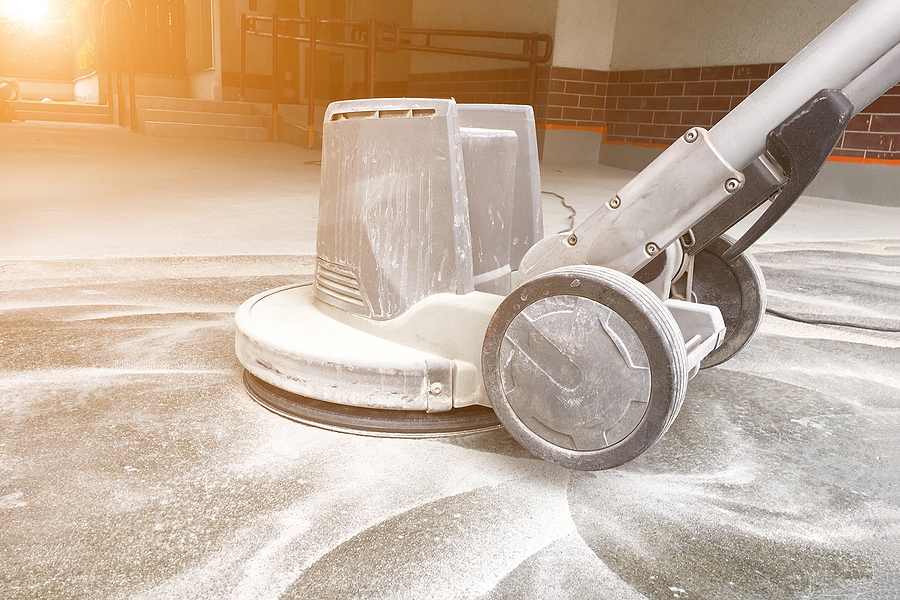
Can Concrete Grinding Remove Paint?
Yes. Concrete grinding is a dependable method for stripping paint from concrete floors, driveways, and other surfaces. As the diamond tooling passes over the surface, it mechanically cuts through painted layers, exposing bare concrete underneath.
How Grinding Effectively Strips Paint Layers
Painted surfaces typically grind down faster than thicker coatings like epoxy, since paint sits closer to the concrete surface and doesn’t penetrate as deeply. A coarse-grit diamond tool handles the bulk removal, while finer grits smooth the surface afterward for a more refined finish.
Best Practices for Painted Concrete Surfaces
Multiple coats of paint, especially older applications, may require more than one pass. It’s worth testing a small section first to gauge how the paint responds and to confirm the appropriate grit sequence before tackling the full area.
When Grinding Is Preferable to Chemical Removal
Chemical paint strippers require dwell time, produce fumes, and often leave residue that needs additional cleanup. Grinding, by contrast, is a mechanical process with no chemical runoff to manage—a meaningful advantage for anyone concerned about disposal or indoor air quality.
Removing Epoxy Coatings with Concrete Grinding
Epoxy presents a tougher challenge than paint. Because epoxy coatings are formulated to bond tightly and resist wear, removing them calls for a more aggressive approach.
Why Epoxy Requires Aggressive Grinding Techniques
Thick epoxy coatings generally require aggressive diamond tooling to break through the surface. Standard grinding segments can struggle against epoxy’s density, especially with older or multi-layered applications.
Diamond Grinding Tools Needed for Epoxy Removal
Polycrystalline diamond (PCD) tooling is widely used for epoxy removal because it gouges into and through the coating rather than simply abrading the surface. This makes it especially effective for thick epoxy, mastic, and other dense coatings that resist standard diamond segments.
Expected Results and Surface Preparation Outcomes
Once the epoxy is ground away, the exposed concrete is left with a textured profile that’s ideal for bonding new coatings, overlays, or flooring systems. This profiling step is part of what makes grinding so valuable: it doesn’t just remove the old coating, it prepares the surface for what’s next.
Stripping Glue and Adhesives
Leftover glue and mastic from old tile, carpet, or flooring installations can be some of the most frustrating residues to deal with. Fortunately, grinding handles many of these adhesives effectively.
Effectiveness of Grinding for Removing Construction Adhesives
Diamond grinding tools can cut through most construction adhesives, exposing clean concrete beneath. The key is matching the tooling to the adhesive type.
Types of Glues That Respond Well to Grinding
Harder, more brittle adhesives tend to grind away cleanly with standard diamond segments. Softer, gummy materials like mastic or tar-based adhesives behave differently—they can clog standard diamond segments rather than being cut away.
Limitations and Alternative Methods When Necessary
For these sticky, soft adhesives, PCD tooling or specialized attachments are usually the better choice. In some cases, very thick or stubborn adhesive buildup may need scraping or another pre-treatment method before grinding can finish the job effectively.
Eliminating Old Coatings and Sealers
Sealers and protective coatings are designed to last, which means removing them takes patience and the right technique.
How Grinding Removes Protective Sealants
Diamond grinding wears away sealers layer by layer, much like it does with paint and epoxy. The exact approach depends on how deeply the sealer has penetrated the concrete and how many coats have been applied over the years.
Multi-Pass Grinding for Stubborn Coating Layers
Older sealers, especially those applied in multiple coats over time, often require a multi-pass grinding approach: a coarse pass for initial removal, followed by progressively finer grits to refine the surface and prepare it for its next use.
Surface Finish Options After Coating Removal
Once old coatings and sealers are removed, the surface can be left exposed, polished for a decorative finish, or prepped for a new coating system—whatever best suits the space.
Is Concrete Grinding the Right Choice?
With so many removal methods available, it’s worth weighing grinding against the alternatives before committing to a project.
Comparing Grinding to Chemical Strippers and Other Methods
Chemical strippers rely on dwell time to break down coatings, and they often leave behind residue that requires additional rinsing or neutralizing. They also may not fully remove coatings that have deeply penetrated the concrete. Grinding, on the other hand, physically removes the material and profiles the surface at the same time—accomplishing two goals in a single process.
Other mechanical methods, like shot blasting or scarifying, can also remove coatings, but grinding tends to offer more control and a smoother resulting surface, which matters when the finished floor will receive a new coating or decorative treatment.
Cost and Time Considerations
Project cost and timeline depend heavily on the size of the area, the thickness and type of coating, and the overall condition of the concrete. A thin coat of paint grinds away far faster than several layers of built-up epoxy or sealer. Getting a professional concrete grinding assessment is the best way to understand what a specific project will involve.
Environmental and Safety Advantages
Because grinding is a mechanical process, it avoids the chemical fumes and disposal concerns that come with strippers. That said, concrete dust generated during grinding contains respirable crystalline silica, which is regulated by OSHA—so proper dust control, typically through a HEPA vacuum attachment, is essential.
For older buildings, it’s also worth testing existing coatings and adhesives for hazardous materials like asbestos or lead-based paint before grinding begins, since products made before the 1980s may contain these substances.
FAQ: Concrete Grinding for Coating Removal
Can concrete grinding remove all types of coatings?
Concrete grinding is effective against most paints, epoxies, sealers, and many adhesives. Very thick or unusually soft coatings may require specialized PCD tooling or a combination of methods, such as scraping before grinding.
How long does concrete grinding take?
Timelines vary based on the size of the area, the coating type and thickness, and the condition of the concrete underneath. A professional evaluation of the specific site provides the most accurate estimate.
What equipment is used for concrete grinding?
Diamond-segmented tooling mounted on floor or planetary grinders does the actual removal work. Coarser grits and PCD tooling handle thick or stubborn coatings, while finer grits refine the surface afterward. A dust vacuum is typically attached to manage airborne silica dust.
What maintenance is needed after grinding?
Once a coating is removed and the surface is ground to the desired profile, the concrete is usually ready for sealing, coating, or overlay application. Keeping the surface clean and free of debris before applying any new treatment helps ensure proper bonding.
Ready for a Cleaner, Coating-Free Surface?
From stubborn epoxy to decades-old sealer, concrete grinding offers a mechanical, residue-free way to prepare surfaces for what comes next. The right tooling and technique make the difference between a rushed job and a properly profiled surface built to last.
If you’re dealing with paint, epoxy, glue, or old coatings on a concrete surface in Central Indiana, contact ACI Asphalt & Concrete for professional concrete grinding services tailored to your project.
Related Post: Can You Grind Down Uneven Concrete Instead of Replacing It?