
Parking lot maintenance protects one of the most visible, heavily used assets on any commercial property. Sealcoating restores a worn surface, blocks UV damage, and gives a lot that fresh, finished look tenants and customers notice right away. But property managers often ask one question before scheduling the work: should cracks be repaired first, or can sealcoating handle them on its own?
It’s a fair question, especially when budgets are tight and timelines are tighter. Sealcoating looks like a complete fix from the surface, so it’s easy to assume it will smooth over small imperfections along with everything else. The reality is more complicated, and getting the order wrong can cost far more than the repair itself would have.
This guide breaks down why crack repair belongs before sealcoating, what happens when that step gets skipped, and how to plan a maintenance schedule that actually protects your pavement investment.
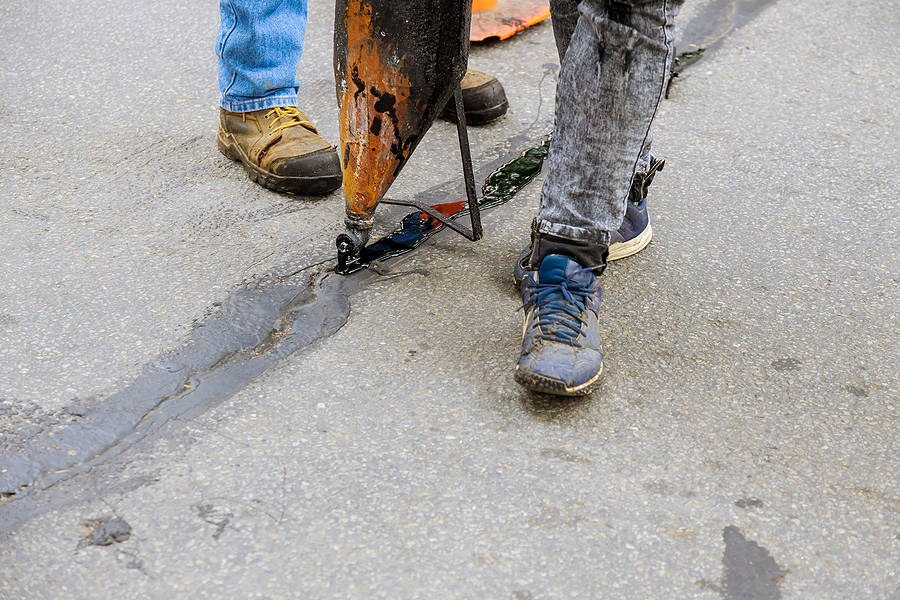
Yes, Cracks Should Be Repaired Before Sealcoating
The short answer is straightforward: repair cracks first, then sealcoat. Sealcoating is a surface treatment. It shields asphalt from oxidation, UV rays, and moisture, but it was never designed to fix cracks or correct structural problems. Applying it directly over damaged pavement doesn’t eliminate the crack—it just hides it temporarily.
Delaying repair doesn’t make the problem disappear, either. It gives water, traffic, and temperature swings more time to turn a minor crack into a major repair bill.
Why Delaying Crack Repair Gets Expensive Fast
Left alone, a small crack rarely stays small. Water works its way in, traffic stress widens the opening, and seasonal temperature changes keep the cycle going. According to the Pavement Preservation & Recycling Alliance, 75% of unsealed cracks turn into potholes within three years, compared to just 1% of cracks that are sealed. That gap illustrates how much damage a few dollars of preventive work can prevent.
The return on investment backs this up. Every $1 spent on crack sealing can save $4 to $10 in future repairs, and pavement preservation data cited by the Indiana Department of Transportation shows that $1 spent on preservation broadly can save $6 to $14 in rehabilitation costs down the line. Repairing cracks early isn’t just good practice—it’s one of the more measurable ways to stretch a maintenance budget.
How Water Damage Worsens Without Repair
Water is the real enemy of asphalt, and cracks are its entry point. Once moisture seeps below the surface, it reaches the base layer that gives the pavement its strength. That layer isn’t designed to handle constant water exposure, and it starts to weaken from the inside out, long before any damage is visible on top.
Freeze-Thaw Cycles Make It Worse
In climates with cold winters, including Indianapolis, freeze-thaw cycles accelerate this damage considerably. Water trapped in a crack expands when it freezes, pushing the crack wider. When temperatures rise again, the ice melts and more water seeps in, ready to refreeze and repeat the process. Over a single winter, this cycle can turn a hairline crack into a significant structural issue.
The Cost of Waiting vs. Acting Early
A 2020 study from NCAT and MnROAD found that sealant applied to pavement in good condition lasts an average of 7.7 years, while sealant applied to pavement in poor condition lasts only 1.1 years. The takeaway is simple: the earlier cracks get addressed, the longer any treatment—sealant or sealcoat—will actually hold up. Waiting doesn’t just risk a pothole. It also shortens the lifespan of every repair that comes after.
What Sealcoating Does (and Doesn’t Do)
Sealcoating plays an important role in asphalt maintenance, but it’s worth being clear about its limits. It protects the surface from oxidation and UV exposure, resists moisture penetration on intact pavement, and refreshes the appearance of a lot that’s starting to look worn. What it does not do is fix cracks, correct structural weaknesses, or stop existing damage from spreading.
Why Sealcoating Over Cracks Traps Moisture
When sealcoat is applied directly over an unrepaired crack, it can actually trap moisture underneath rather than keeping it out. That trapped water continues to erode the base layer, hidden beneath a surface that now looks freshly maintained. The damage keeps progressing, just out of sight, until it resurfaces as a much bigger problem.
How Proper Prep Extends Sealcoat Lifespan
Preparing the surface correctly, cracks repaired, debris cleared, and pavement clean and dry, gives sealcoat the stable base it needs to bond properly. That preparation directly affects how long the sealcoat lasts and how well it performs against weather and daily traffic.
Types of Cracks and the Right Repair Method
Not every crack calls for the same fix. Matching the repair method to the type of damage keeps costs reasonable and results lasting.
Linear Cracks
Linear cracks, the narrow, straight-line cracks that appear as asphalt ages and contracts, are typically the easiest to address. Crack sealing works well for these, especially for working cracks up to about 1.5 inches wide, with an ideal range of 1/4 inch to 1.5 inches. Sealing uses a flexible, rubberized, hot-applied material designed to expand and contract with the pavement, which is why it holds up well against working cracks that move with temperature changes.
Routing, cutting a small reservoir along the crack before sealing, improves results further. The Federal Highway Administration notes that routing can extend sealant life by about 50%. Data from a Minnesota DOT study backs this up: routed-and-sealed cracks lasted roughly four years, compared to about two years for a simple clean-and-fill approach without routing.
Alligator Cracking
Alligator cracking looks exactly like its name suggests: a web of interconnected cracks resembling reptile skin. This pattern signals a structural problem rather than a surface issue, and it requires a different approach entirely. Sealing over alligator cracking doesn’t solve anything; it wastes material and money while the underlying damage continues to spread. These areas typically need patching, milling and overlay, or in more severe cases, full reconstruction.
Repair Costs vs. Replacement
Crack sealing without routing generally runs $0.90 to $1.50 per linear foot, while routed sealing costs $1.50 to $3.00 per linear foot. Crack filling service, a less durable option suited for non-working cracks, typically costs $1.00 to $2.00 per linear foot.
For comparison, pothole repair runs about $2.00 to $2.50 per square foot, and resurfacing a two-inch layer falls in a similar $2.00 to $2.50 per square foot range. These figures are national benchmarks, and actual Indianapolis pricing will vary based on project size, access, and current material costs.
The pattern is clear: addressing cracks while they’re still minor costs a fraction of what resurfacing or reconstruction requires later.
The Right Order: Repair, Then Seal
A sound maintenance plan follows a consistent sequence, and skipping steps tends to cost more in the long run.
Step-by-Step Process
- Inspect the lot. Industry guidance recommends checking pavement twice a year, in spring and fall, to catch cracks before freeze-thaw cycles can widen them.
- Clean and dry all cracks. Sealant needs a clean, dry surface to bond properly, and adhesion drops significantly below 40°F pavement temperature.
- Route cracks where appropriate. This step extends sealant life substantially and is worth the extra labor on larger cracks.
- Apply crack sealant and allow it to cure. Sealed cracks stay tacky for 30 minutes to several hours depending on temperature, though a detacking agent or limestone dust can allow traffic sooner.
- Sealcoat the full surface once the repaired areas have cured, creating a uniform, protected finish across the lot.
Timing Considerations
Spring and fall, with ambient temperatures between roughly 40°F and 85°F, offer the best conditions for both crack sealing and sealcoating. These seasons also happen to align well with the recommended twice-yearly inspection schedule, making it easier to schedule sealcoating and repairs in the same maintenance window. New asphalt is the one exception: it generally needs to cure for 6 to 18 months before its first sealcoat application, depending on the source and specific installation.
Budgeting for the Full Job
Property managers get the most value by budgeting for crack repair and sealcoating together, rather than treating them as separate line items. A lot with a consistent maintenance program, cracks addressed as they appear, sealcoat applied on schedule, can last 20 to 25 years. Neglected pavement, by contrast, often needs major rehabilitation after just 10 to 12 years. The math favors staying ahead of the damage.
Frequently Asked Questions
How much does crack repair cost?
Crack sealing typically costs $0.90 to $3.00 per linear foot, depending on whether routing is included, while crack filling runs $1.00 to $2.00 per linear foot. Smaller jobs with contractor minimums can run higher, sometimes $2.00 to $5.00 per linear foot. Pricing varies by region and project size, so a site-specific estimate from a local contractor is the most reliable way to budget.
Can I sealcoat immediately after crack repair?
Sealant needs to cure before sealcoating begins. Curing time depends on temperature and the product used, and a qualified contractor can confirm when a specific lot is ready for the next step. Applying sealcoat too soon risks disturbing the repair before it has fully set.
How long do sealed parking lots last?
Properly routed and sealed cracks typically last 5 to 8 years, and consistent, scheduled maintenance can extend a parking lot’s overall lifespan to 20 to 25 years. Lots that go without regular crack repair and sealcoating often need significant rehabilitation in as little as 10 to 12 years.
Protect Your Investment the Right Way
Skipping crack repair before sealcoating might save a little time upfront, but it tends to cost far more once water damage and freeze-thaw cycles take hold. Repairing cracks first gives sealcoat the stable, properly prepared surface it needs to actually protect your pavement for years to come.
If your parking lot has visible cracking or it’s due for its next maintenance cycle, ACI Asphalt & Concrete in Indianapolis can assess the pavement and recommend the right repair and sealcoating plan for your property. Request a free inspection and estimate to get started.
Related Posts:
Concrete Crack Repair: Should You Fill It or Seal It?
Indiana Parking Lot Maintenance: Tips to Protect Your Pavement
Pavement Protection 101: The Process of Asphalt Sealcoating