
Standing water in your parking lot isn’t just an eyesore. It’s a warning sign.
Property owners across Central Indiana deal with this problem every rainy season. Water collects in low spots, lingers for hours or even days, and slowly eats away at the asphalt beneath it. Left unaddressed, pooling water can shorten your parking lot’s lifespan, create safety hazards for pedestrians and drivers, and attract pests looking for a place to breed.
The good news? Water pooling almost always has an identifiable cause. Once you know what’s behind it, you can take the right steps to fix it before small puddles turn into expensive repairs.
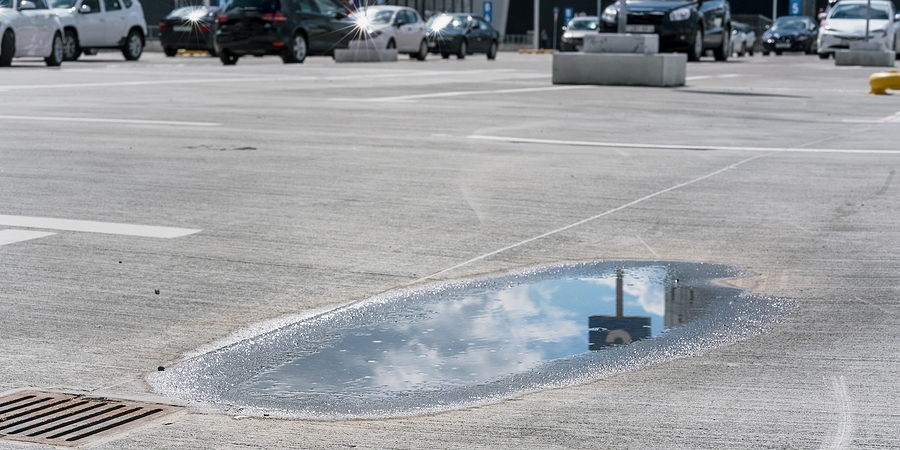
What Causes Water Pooling in Parking Lots
Pooling water is rarely random. It usually comes down to one of a few underlying issues.
Poor Drainage Design or Inadequate Slope
Parking lots need to be graded with enough slope to move water toward drains instead of letting it collect. Industry design guidelines recommend a minimum slope of about 1/4 inch per foot for both the subgrade and the pavement surface. When a lot is built without enough pitch, or the pitch isn’t applied evenly, water has nowhere to go.
Clogged or Missing Storm Drains
Even a well-designed drainage system can fail if the storm drains and catch basins aren’t maintained. Leaves, dirt, and debris build up over time, blocking the path water needs to flow away from the surface.
Settled or Cracked Asphalt Creating Low Spots
Asphalt shifts over the years. Traffic loads, freeze-thaw cycles, and natural settling can create dips and depressions where water naturally gathers, even if the original grading was sound.
Compacted Soil Preventing Water Absorption
Heavy vehicle traffic compacts the soil beneath and around the pavement. Compacted soil doesn’t absorb water the way it should, which pushes more water to the surface and increases runoff in areas that should be draining properly.
Signs Your Parking Lot Has Drainage Issues
Drainage problems rarely appear overnight. Watch for these warning signs:
- Standing water that lingers after rainfall. If puddles are still visible hours (or days) after a storm, that’s a clear signal something’s wrong.
- Cracks spreading across the asphalt surface. Water that seeps into cracks weakens the pavement from within.
- Potholes forming in specific areas. Repeated pooling in the same spot accelerates pothole formation there.
- Vegetation or algae growth in wet spots. Persistent moisture creates the perfect environment for unwanted growth.
- Visible erosion around the parking lot edges. Water that isn’t properly channeled will wear away soil and pavement edges over time.
If you’re noticing more than one of these signs, it’s worth getting your lot evaluated sooner rather than later.
How Water Pooling Damages Your Asphalt
Standing water doesn’t just sit harmlessly on the surface. It actively breaks down your parking lot from the ground up.
It Weakens the Base Layer Beneath the Surface
Water seeps through the asphalt and saturates the base layer, softening the foundation your parking lot depends on for structural support.
It Accelerates Cracking and Pothole Formation
Once water gets into the base, Indiana’s seasonal freeze-thaw cycles make things worse. Water expands as it freezes, widening cracks and speeding up pothole development.
It Reduces the Lifespan of Your Parking Lot
Asphalt that’s regularly exposed to standing water deteriorates faster than asphalt that drains properly. What should be a decades-long investment can end up requiring major repairs or replacement far sooner.
It Creates Liability Risks for Slip-and-Fall Accidents
Puddles hide uneven surfaces and potholes, creating slip-and-fall risks for customers, employees, and visitors. Beyond the safety concern, that’s a liability exposure no property owner wants to deal with.
Solutions to Fix Water Pooling
The right fix depends on what’s causing the problem in the first place.
Repaving with Proper Grading and Slope
If the original slope was inadequate or has settled over time, repaving with corrected grading addresses the root cause rather than just the symptoms.
Installing or Cleaning Drainage Systems
Sometimes the fix is simpler: clearing out clogged storm drains and catch basins, or installing new drainage structures where the lot was underserved to begin with.
Seal Coating to Prevent Water Penetration
Seal coating adds a protective layer that keeps water from penetrating the asphalt surface, which helps slow down cracking and base deterioration.
Adding French Drains or Catch Basins
For lots with persistent low spots, French drains or additional catch basins can redirect water away from problem areas without requiring a full repave.
When to Call a Professional
Some drainage issues can be monitored. Others need immediate attention. Call a professional company for parking lot paving repair if:
- Pooling covers more than a small, isolated area of your lot
- You’re noticing multiple drainage issues at once (clogged drains, low spots, and cracking together)
- You want to address the problem before water damage becomes extensive and repair costs climb
Waiting too long on drainage issues almost always costs more than addressing them early.
FAQ
How quickly does water damage asphalt?
The timeline depends on the severity of the pooling, the age and condition of the base layer, and how many freeze-thaw cycles the lot goes through each year. In Indiana, water that seeps into cracks and freezes during winter months can accelerate damage considerably compared to warmer climates.
Can I fix water pooling myself?
Minor fixes, like clearing debris from a storm drain, are manageable on your own. However, issues involving grading, slope, or base damage require professional equipment and expertise to diagnose and repair correctly.
How much does parking lot drainage repair cost?
Costs vary widely based on the size of the lot, the extent of the damage, and the specific repair needed, ranging from drain cleaning to full repaving. A professional evaluation is the most reliable way to get an accurate estimate for your property.
Protect Your Parking Lot Before Small Problems Grow
Water pooling is a problem that only gets worse with time. What starts as a minor inconvenience after a rainstorm can turn into cracked pavement, costly repairs, and safety liabilities if it’s left unaddressed.
A professional assessment is the best way to pinpoint exactly what’s causing the pooling on your property and determine the most cost-effective solution.
Contact ACI Asphalt & Concrete, serving Central Indiana and based in Indianapolis, for a free parking lot evaluation. Our team will help you identify the cause of your drainage issues and get your lot back in shape before the next storm rolls through.
Related Posts:
Optimizing Stormwater Management for Commercial Pavements: Reduce Costs and Prolong Lifespan
Should I Be Worried About Standing Water on My Asphalt Lot?
Commercial Sewer Drain Repair: Signs Your Parking Lot Has a Drainage Problem