How Many Parking Spaces Must a Parking Lot Have to Be ADA-Compliant?

Parking lots play a large role in a company’s overall success. They provide function, convenience, efficiency, and even safety and security. For these reasons and more, it is vital to preserve your commercial or industrial parking lot by implementing routine maintenance, including inspections and repairs-as-needed. In fact, the 2010 ADA Standards for Accessible Design, derived from the American with Disabilities Act (ADA), requires that parking lots meet certain qualifications that better serve individuals with disabilities. Such requisites include handicap-accessible parking, entrances, and exits, as well as, walkways, roadways, ramps, and more, for any facility built after March of 2012.

But even with all of these features incorporated into a lot, the number and types of accessible parking spaces also matter. Specific rules and regulations apply when allocating handicap-accessible parking spaces, but many proprietors mistakenly overlook this ADA-compliancy standard, which can put them at risk of being in violation of city codes and ordinances, and consequently, subjected to heavy fines ranging from $1,500 to $10,000 or higher. As a commercial or industrial property owner, you may need to renovate or rebuild your parking lot if it does not meet these standards.

Continue reading to learn exactly how many and which types of accessible parking spaces your commercial or industrial lot must have to remain ADA-compliant at all times.
ADA Compliant Parking Lot Paving in Indianapolis
ADA Compliant Parking Lot Paving in Indianapolis 317-549-1833

ADA-Compliant Parking Lots

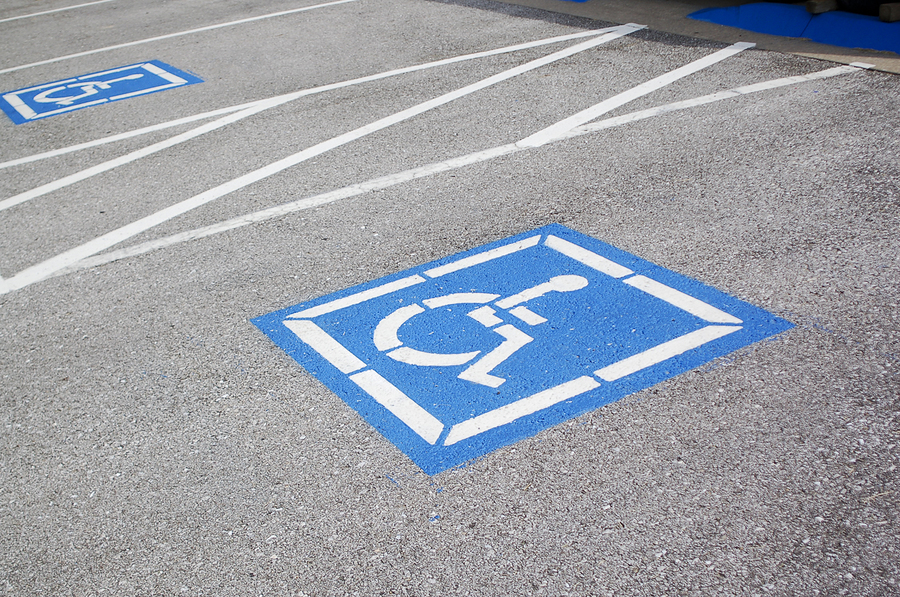
In addition to the number of accessible parking spaces, ADA regulations also govern stall sizes and road markings. When it comes to the number and types of accessible parking spaces for a commercial parking lot, the leniency or stringency of enforcing ADA compliancy will differ among localities and state governments. However, the standard qualifications for accessible parking spaces for cars and vans established by the ADA are as follows:

❖ The United States Access Board mandates that parking lots should have a stated number of handicap-accessible parking spaces based on the overall number of available spaces. They further require that, for every 6 handicap-accessible spots, there should be 1 van-accessible parking spot.

❖ Medical facilities that offer outpatient care must have at least 10% more accessible parking spots for handicap and disabled individuals. Likewise, rehabilitation and physical therapy centers must have 20% more handicap-accessible spots.

❖ Parking lots that are used solely for police vehicles, buses, delivery trucks, and service vehicles do not require handicap-accessible parking.

ADA Minimum Quantity of Handicap-Accessible Parking Spots:
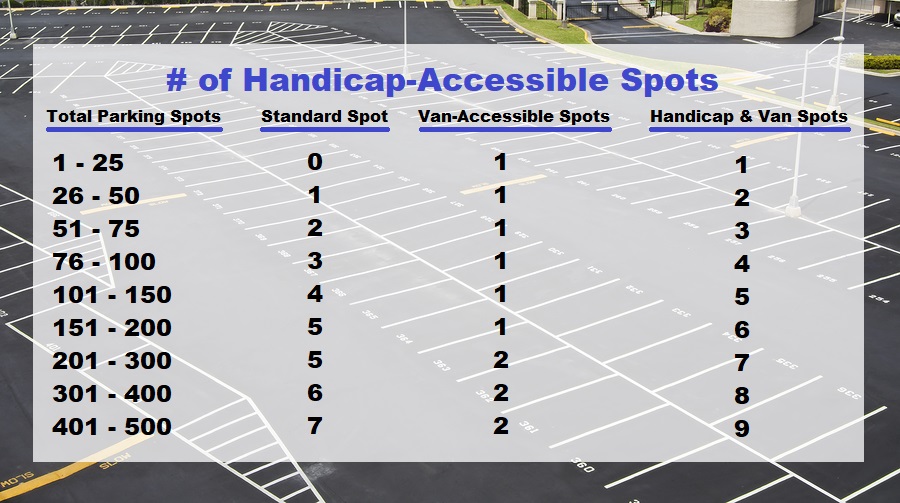
large numbered space parking lot from above

500 to 1000 Parking Spaces:

➾ 5 out of every 6 stalls should be standard handicap accessible.
➾ 1 out of every 6 should be handicap van-accessible.
➾ 2% of the total number of accessible stalls should be handicap-accessible.

1000+ Parking Spaces:

➾ 5 out of every 6 stalls should be standard handicap accessible.
➾ 1 out of every 6 should be handicap van-accessible.
➾ 20 spots total, plus 1 for every 100 standard spots.

🏙 To learn your city’s ADA parking lot requirements, contact your local city office, or speak with a licensed pavement repair company that specializes in commercial and industrial scale work.

Where to Find Commercial Pavement Construction Services in Indianapolis

Call ACI Asphalt and Concrete at 317-549-1833 for commercial and industrial pavement construction services in Indianapolis, Indiana. Our licensed and qualified paving contractors provide several Indianapolis asphalt and concrete paving services, including pavement repair, sealcoating, road work, commercial paving, industrial paving, winter cold patching, and more. We are the industry veterans to trust for skilled craftsmanship and competitive prices! Request a free estimate, today.
Can I Repair a Pothole Myself?

There is no argument about it, potholes are menacing. They are especially undesirable to have on or near your own property. But whether you are a commercial or residential property owner, it is not wise to attempt pothole repair on your own. Continue reading to learn more about pothole management, including how they form and why you should always hire a professional to have them repaired.

Indianapolis Pothole Repair 317-549-1833

The Basics of Pothole Formation

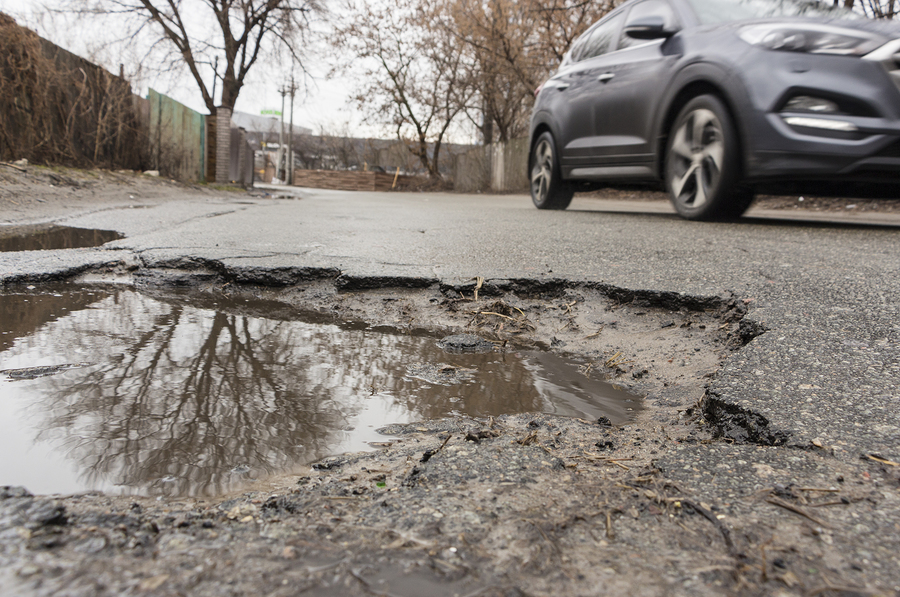
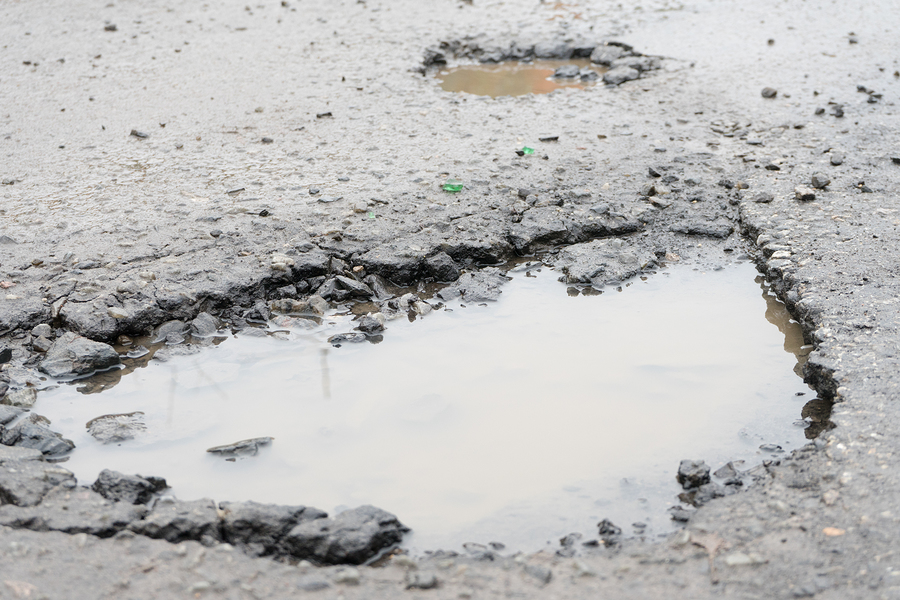
Pothole formation begins when water seeps into existing cracks and depressions in pavement that have been caused by a combination of inclement, weather, traffic, and natural wear and tear. Water then reacts with the cold temperatures by freezing and subsequently expanding. Then, when temperatures become milder, the water thaws, causing the existing cracks to contract and ultimately worsen.

This worsening is due to water draining and evaporating into the surface, causing a gap to form between the ground and the pavement. The more this cycle occurs, the larger the surface blemishes get, and eventually form what we frustratingly know as potholes. Both asphalt and concrete surfaces are vulnerable to these effects, including sidewalks, parking lots, roads, streets, pool decks, and more.

Conventional Pothole Repair Methods

There are various types of pothole repair methods used in the pavement construction industry, both semi-permanent and temporary versions. One of the most popular techniques used to repair potholes is the “throw and roll” method. This is a temporary fix that basically involves patching the hole with the right material, and then letting traffic drive over it to finish the job. This is the quickest and easiest technique for repairing a pothole on a short-term basis.

In fact, it can cause even more water accumulation and stability issues if used as a permanent solution. This is because the pothole is only being filled-in from the top, which means the rocks and pebbles still inside creating gaps beneath the surface where water can occupy. To make the “throw and roll” repair method semi-permanent, these chunks of rock and pavement need to be removed before the hole is filled with patching material.

DIY Pothole Repair

As you can see, there are many specialized materials, machines, and technologies used to ensure pothole repair is finished up to code, and lasts a long time. If you attempt to repair a pothole yourself, you are not promised long-lasting results. Furthermore, you would have to spend more money acquiring the necessary materials and supplies for the job. It is more cost-effective to hire a professional pavement repair company to fill in potholes. They will do the job right the first time, so that you do not have to address it again in the future.

As for business owners, hiring professionals is a must. Fortunately, commercial asphalt repair is more affordable than most people believe, and you can find reputable commercial pavement repair services in a matter of minutes. Just be sure to choose a company that is licensed and insured, with years of experience and training. They can offer competitive rates and free estimates, saving you hundreds of dollars along the way.

Commercial Paving Contractors in Indianapolis, Indiana

Call ACI Asphalt and Concrete at 317-549-1833 for commercial pothole repair and paving services in Indianapolis, Indiana. Our licensed and qualified contractors provide several asphalt and concrete paving services, including pavement repair, sealcoating, road work, commercial paving, industrial paving, winter cold patching, and more. We are the industry veterans to trust for skilled craftsmanship and competitive prices! Request a free estimate, today.
4 Types of Concrete Water Stops and What They Do

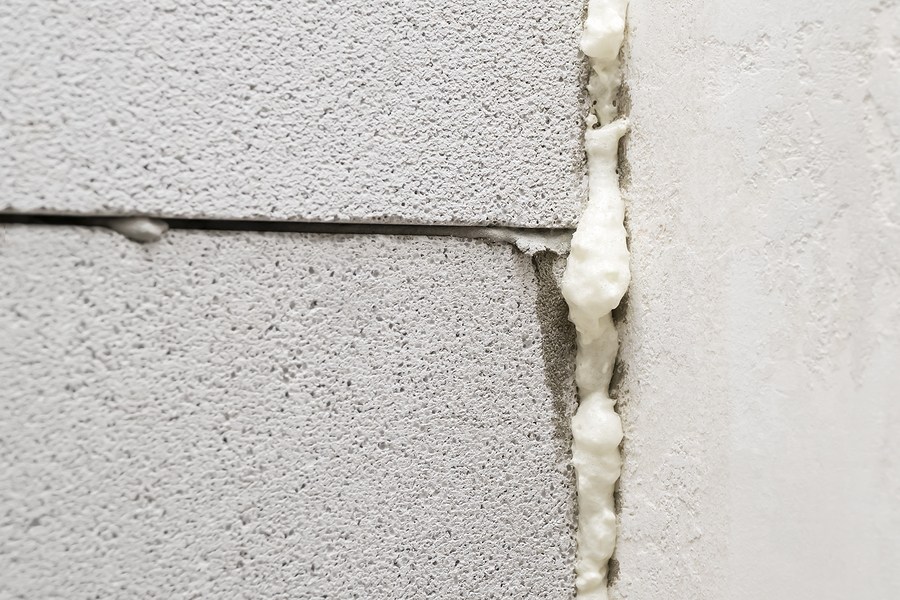
Waterstops are embedded into, and continuously run through, concrete structures or slabs for the purpose of preventing water and other fluids from passing through. There are two main categories for concrete waterstops. The first includes waterstops for concrete joints in which the adjoint concrete sections do not move, while the second category includes waterstops for concrete joints in which the adjoint concrete sections do experience movement.

From there, more types of waterstops exist. Continue reading to learn the top 4 most common concrete waterstops.

Indianapolis Commercial Concrete Contractors
Indianapolis Commercial Concrete Contractors 317-549-1833

Extruded Plastic Waterstops

Extruded plastics and thermosets, such as polyvinyl chloride (PVC) or thermoplastic vulcanized rubber (TPV), are common materials used to manufacture concrete waterstops. Other rubbers used to make waterstops include neoprene, styrene-butadiene, and even natural rubber.

Metal Waterstops

Metal waterstops come in coils as large as 50 m, and usually between 1.0 to 1.5 mm in thickness and 250 to 300 mm in width. Some metal waterstops are coated with polymeric or hydrophilic materials, or both in some cases. Such coatings form a tighter bond with concrete, and therefore, a second barrier against fluids.

Hydrophobic Polymer Waterstops

Hydrophobic polymer waterstops are made from the same kinds of extruded plastics mentioned before, like PVC and TPV. These kinds of waterstops are meant to do two jobs at once: allow direct interlocking into concrete, and prevent movement at the joints. They are generally applied to joints in secondary containment structures to prevent toxic or hazardous fluids from passing through.

Hydrophilic Waterstops

Also known as “water-loving” waterstops, hydrophilic waterstops are rubber strips that are enhanced with hydrophilic agents like bentonite. This modification causes the waterstops to swell when exposed to moisture or fluids. As a result, concrete joints are better sealed against leakage. However, such waterstops are not used in joints that move, such as expansion and contraction joints.

Commercial Concrete Contractors in Indianapolis

Call ACI Asphalt and Concrete at 317-549-1833 for commercial concrete services in Indianapolis, Indiana. Our licensed and qualified paving contractors provide several Indianapolis concrete paving services, including pavement repair, sealcoating, road work, commercial paving, industrial paving, winter cold patching, and more. We are the industry veterans to trust for skilled craftsmanship and competitive prices! Request a free estimate, today.
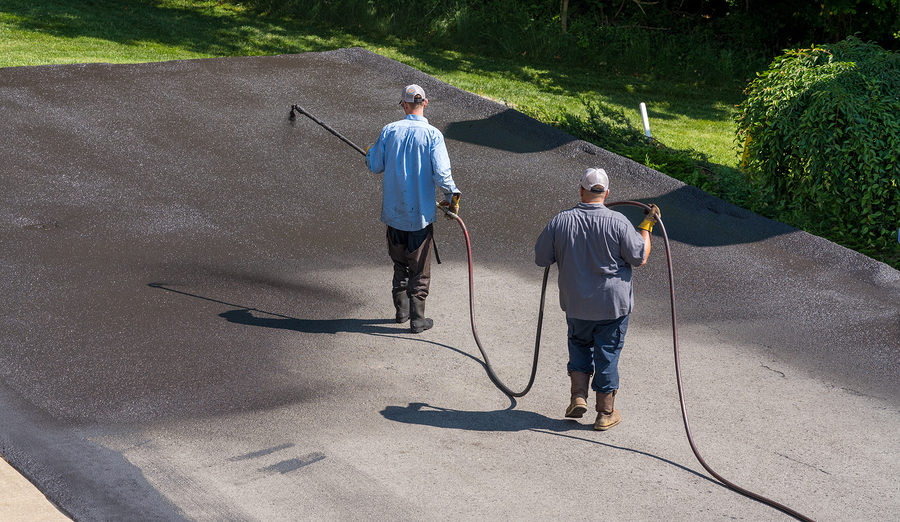
When is the Best Time of Year to Sealcoat Asphalt?

The brilliant and uniform look of freshly-coated asphalt pavement instantly upgrades the value of a commercial property. Aside from the aesthetic benefits, asphalt sealcoating also prevents asphalt decay, which can be caused by natural wear and tear, inclement weather, and time. Asphalt decay can come in many forms, including alligator cracking, crumbling, potholes, dips, and more.

Fortunately, asphalt sealcoating is an effective solution for protecting asphalt against natural wear and tear, and preserves the fresh appeal of blacktop for years. A proper sealcoat also protects asphalt surfaces from the harmful UV rays of the sun. When these rays penetrate the asphalt foundation, it can cause it to weaken and wear away over time. A layer of sealcoat acts as a shield against these UV rays, and extends the life of pavement for years to come.

Continue reading to learn what you need to know about sealcoating asphalt, most importantly, when is the best time of year to apply it for optimal and long-lasting results.

Indianapolis Asphalt Sealcoating Services 317-549-1833
Indianapolis Asphalt Sealcoating 317-549-1833

The Purpose of Sealcoating

Sealcoating is a preventative application meant to protect the surface of pavement, thus extending its life and the quality of its performance. It involves applying one or two layers of asphalt material, known as sealant, for the purpose of protecting cracks, gaps, and other vulnerable or permeable areas. If you have ever seen a stunning, perfectly smoothed-out blacktop, you have seen a proper sealcoating job.

But even though sealcoating delivers an exceptional curb appeal, it is also one of the most important parts of asphalt maintenance. In fact, it is recommended to have your commercial asphalt resealed every 3 to 5 years, depending on the amount of traffic your lot gets and the extent of inclement weather in your region. See our blog, “Frequently Asked Questions about Sealcoating” to learn more about the process and its advantages.

🌷 The Best Time to Sealcoat is the Spring! 🌷

The best time of year to apply an asphalt sealcoat is in the spring, when temperatures are ambient and weather conditions are mild and predictable. Once the climate gets too hot, issues can occur with the way sealcoating adheres and cures. So long as you have a skilled paving company providing the service, this should never be a problem.

Summer Sealcoating

There are many challenges that can arise from seal coating in hot weather. However, this does not mean you have to wait until fall to have your lot seal coated. Just be sure to hire a professional Indianapolis paving company to ensure the project gets done right the first time. Accordingly, it is not recommended to attempt seal coating or pavement work on your own in hot weather, not just for your own safety, but for liability and investment protection purposes.

Commercial Asphalt Sealcoating in Indianapolis You Can Trust

Call ACI Asphalt and Concrete at 317-549-1833 for commercial and industrial asphalt sealcoating services in Indianapolis, Indiana. Our licensed and qualified paving contractors provide several Indianapolis asphalt and concrete paving services, including pavement repair, sealcoating, road work, commercial paving, industrial paving, winter cold patching, and more. We are the industry veterans to trust for skilled craftsmanship and competitive prices! Request a free estimate, today.
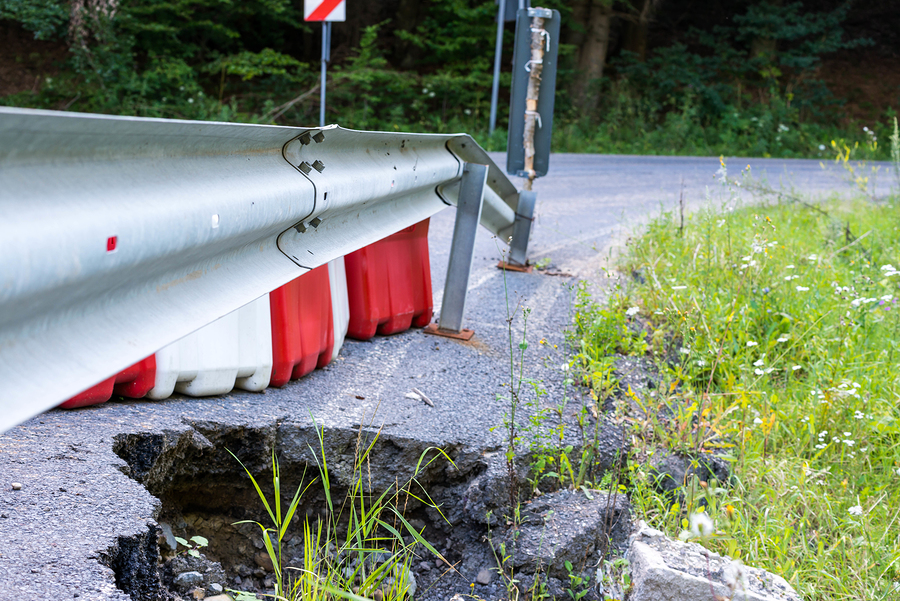
Storm Damage Pavement Repair Tips You Need to Know

As a commercial property owner, the safety and function of your business’s paved areas are important to your overall bottom line; and in more than one way. From liability and lawsuits, to customer volume, social appeal, and more, the list goes on and on. So, after this recent hailstorm we experienced in Indianapolis, it is wise to address any pavement damages that resulted, sooner than later.

Continue reading to learn what you need to know about storm damage pavement repair, including how to perform an inspection, and who to call for trusted commercial paving work.

Storm Damage Pavement Repair Indianapolis
Storm Damage Pavement Repair 317-549-1833

Perform a Pavement Inspection

After a harsh storm passes, and the weather calms down, always be sure to take a walk around your premises to inspect for unsafe conditions and damages. Be sure to perform this inspection during the day, when the lighting is sufficient; that way, you will have a better view of any damages. Begin with your bollard posts, curbs, steps, rails, and ramps. These areas are particular important in terms of safety and functions.

From there, you will want to turn your focus on the flat surfaces of your pavement, and look for potholes, cracking, crumbling, depressions, or heaving. Once you have a full report of all new and existing damages, you are well-equipped to contact a local commercial pavement repair company and request an on-site assessment.

What to Inspect and/or Look For After a Harsh Storm:

⇾ Bollard Posts
⇾ Culverts and Sewer Drains
⇾ Curbs
⇾ Steps
⇾ Rails
⇾ ADA Ramps
⇾ Traffic and Parking Signs
⇾ Potholes
⇾ Depressions or Concave Surfaces
⇾ Heaves or Raised Bumps
⇾ Standing Water

How to Reinforce Your Pavements to Withstand Harsh Weather

The best options for ensuring your commercial pavements remain strong and sturdy, and therefore, resistant to inclement weather, include sealcoating, routine cleaning, prompt repairs of minor damage, scheduled resealing, and timely overlays or resurfacing. See our blogs, “Important Concrete Maintenance Tips” and “Important Asphalt Maintenance Tips” to learn what you need to know about developing an effective pavement maintenance plan for your commercial property.

Where to Get Emergency Storm Damage Pavement Repair in Indianapolis

Call ACI Asphalt and Concrete Inc. at 317-549-1833 for commercial and industrial pavement repair in Indianapolis, Indiana. Our licensed and qualified paving contractors provide several Indianapolis asphalt and concrete paving services, including pavement repair, sealcoating, road work, commercial paving, industrial paving, winter cold patching, and more. We are the industry veterans to trust for skilled craftsmanship and competitive prices! Request a free estimate, today.
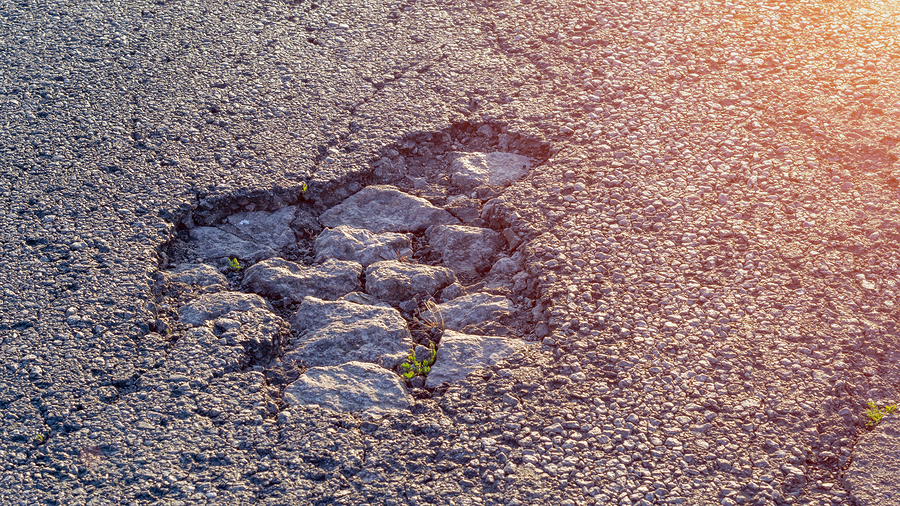
Why Pothole Repair Should Be at the Top of Your Priority List

Although spring has had a strong start this year, allowing us to enjoy brighter, greener days, those damaging potholes left over from winter are still depriving drivers of a safe and comfortable commute. It is vital to repair potholes as soon as they form, and even prior to forming. Not only does pothole repair support safety, function, and convenience, it also supports economic growth, cost-savings, and investment protection.

Continue reading to learn why you, as a commercial or municipal proprietor, should outsource professional pothole repair service as soon as your pavements begin to show signs of cracking and deterioration.

Indianapolis Pothole Repair 317-549-1833

The Importance of Pothole Repair

Potholes are arguably one of the biggest issues in metropolitan areas among commuters. To make matters more serious, potholes get worse as time goes on. So, if a pothole is not repaired, it will only continue to get bigger, and eventually it will evolve into a massive crumbling hole. Potholes are created by excess moisture in asphalt and concrete pavements. This is usually a result of snow, ice, and rain.

Porous pavements, like concrete, lose their protective coating after a few years as a result of natural wear and tear. The same can happen to asphalt paving as well. When this happens, they become vulnerable to water accumulation in their pores. Accumulated water then freezes and thaws from season to season, causing pavement to deteriorate from within. This leads to pavement cracks, fractures, fissures, and more.

Pothole Repair

As soon as you see signs of pothole formation, it is important to have your pavements inspected and serviced to inhibit further damage and deterioration. From there, is it essential to protect your pavements from damage with regular cleaning, maintenance, and most importantly, sealcoating. See our blog, “Frequently Asked Questions about Sealcoating” to learn what you need to know about protecting your pavements. The most common signs that suggest your pavements will soon form potholes are water retention and puddling, cracking, crumbling pavement, loose gravel, and lack of seal coat.

The process of repairing and patching up potholes can differ slightly depending on certain variables, such as the condition of the pavement, the type of pavement, extent of damage, and more. For most paving repair projects, the process involves a general pattern of steps. A paving company will always start with a full inspection of the damaged pavement to provide an accurate assessment. This allows them to then plan the pothole patching process according to your property’s unique needs.

Commercial Pothole Repair Services in Indianapolis

Call ACI Asphalt and Concrete at 317-549-1833 for professional pothole repair services in Indianapolis, Indiana. Our licensed road construction contractors provide a wide range of asphalt and concrete work for commercial and industrial properties, including inspections, installation, replacement, repair, and more. We also offer free estimates and consultations, flexible scheduling, references upon request, and more. Best of all, our work is backed by our 100% Satisfaction Guarantee, so you can rest assure that your investment is sound. Request a free quote, today.

Common Asphalt Problems That Should Be Repaired This Spring

Now that the last freeze is likely behind us, commercial and large-scale lots that are paved will soon require some maintenance. This is especially true for asphalt pavements that have poor sealcoating, or none at all. In fact, asphalt experiences a lot of common problems this time of year, all of which should be addressed and resolved once spring is official in swing.

Continue reading to learn which types of asphalt problems are most expected this time of year, and what you should do if your asphalt pavements fit these descriptions.

Indianapolis Commercial Paving
Indianapolis Commercial Paving 317-549-1833

Cracking

There are various types of cracking that can develop in asphalt surfaces. Alligator cracks, block cracks, traverse cracks, and edge cracks are among the most common. Alligator cracking occurs when the subgrade, layers, or surface is either too weak or too thin to support the weight of traffic. You can easily identify alligator cracks because they form interconnecting lines in a pattern that literally resembles alligator skin.

Block cracks form in a pattern similar to alligator cracks, but on a much larger scale. Traverse cracking refers to cracks that form in the opposite direction of the pavement. Generally, underlying foundation weaknesses and cracks are to blame for traverse cracking, as well as extreme temperature changes. Edge cracks form along the edge of pavements as a result poor water drainage.

Potholes

Potholes are one of the most destructive road defects that can develop in asphalt pavement. They form mostly due to poor sealcoating or lack thereof, allowing water to seep deep down into the cracks and weaken the base soil underneath. Water then freezes and thaws several times, which further jeopardizes the ground level and solidity. As a result, the ground underneath expands, which causes the pavement to rise, then the water thaws, causing the ground to go back to normal. This cycle creates stability issues that eventually lead to crumbling pavement or crater holes.

Raveling and Rutting

Raveling is when pieces of asphalt begin to separate and form indentations in the surface of the pavement. It mostly occurs when asphalt is installed in weather that is too cold for proper curing. This is why it is important to hire a professional paving company for asphalt work. Rutting is form from traffic, and simply look like ruts, or wheel indents, in the road. Typically, this occurs when lower layers shift due to moisture permeation or poor surface quality.

Heaving and Depressions

Sinking and dipping can cause depressions in asphalt pavements, and be a result of several circumstances. Most often, soil erosion brought on by too much rainwater or precipitation over the winter season is to blame. As for heaving, raises and humps in asphalt are mostly caused by the expansion of clay-based soils beneath the concrete, which occurs from moisture accumulation.

Indianapolis Commercial Asphalt Repair You Can Trust

Call ACI Asphalt and Concrete at 317-549-1833 for licensed, bonded, and insured asphalt paving services in Indianapolis, Indiana. We offer a wide range of paving services for commercial and industrial properties, at the most competitive prices in town, including inspections, installation, replacement, repair, and more. Request a free quote, today.

Who to Contact for Pothole Repair in Indianapolis

Road work is complex. Not only does it require a concentrated, scientific methodology, it also requires quality materials, skilled labor, and most importantly, professional industry acumen. If these standards are not met, pavements steadily lose quality and deteriorate over time. One common result that we all know too well is pothole formation. Potholes are a common road defect, especially this time of year when freeze-thaw cycles are taking over. When they are not patched properly, they will continue to come back, year after year. This is why commercial and industrial property owners, as well as municipal pavements, seem to always have potholes.

It is important to contact the appropriate authorities to have potholes repaired. Residential property owners and commercial companies will need to call different sources, while city potholes must be reported in a particular manner, through a specific portal. The proper authority to contact will vary depending on the location, which can make it difficult to know who to actually contact for pothole and road repair. So, for your convenience, we have compiled the information you need to know about pothole repair and management in Indiana.

Continue reading to learn who to contact for pothole repair, as well as, important information regarding winter road patching and similar pavement repair work.

Indianapolis Pothole Repair 317-549-1833

Causes of Winter Road Defects

The winter climate is hard on pavements. A natural phenomenon known as freeze-thaw cycles occurs each year, which starts with water and moisture seeping deep into the pores of pavement. As a result, pavements contract and expand repeatedly, thus creating cracks, crumbling, and similar atrophic damage. Eventually, craters form, which we know as potholes. Another leading cause of pothole formation is poor or improper pavement installation. It is vital to always hire a licensed and bonded Indianapolis commercial pavement company that retains the proper experience, skills, equipment, and materials to perform their work.

Aside from winter weather and poor craftsmanship, potholes are also commonly caused by natural wear and tear. Pavements, although can be made to last a long time, do not last forever. At some point, they will begin to show signs of deterioration, and eventually develop potholes. For this reason, it is important to address pavement defects and minor repair needs as soon as possible, before it can turn into a larger, more invasive renovation.

Pothole Repair for Asphalt

Cold patch asphalt mix is mostly used to fill potholes on a year-round basis. There are various grades, all designed for specific climates. There is a specially-formulated winter grade for temperatures of 40 degrees Fahrenheit or below, a spring and fall grade for temperatures between 40 and 60 degrees Fahrenheit, and a summer mix for temperatures between 60 and 80 degrees Fahrenheit. When it comes to asphalt, the process of repairing potholes and related road damage is generally performed during spring and summer because a hot asphalt mix product is used. However, with winter cold patching, it is possible to make emergency asphalt repairs in the winter because the mix product is designed with special polymers that render it ready-to-use at all times.

City Potholes

There are various types of pothole repair methods used in the pavement construction industry, both semi-permanent and temporary versions. One of the most popular techniques used to repair potholes for the city is the “throw and roll” method. This is a temporary fix that basically involves patching the hole with the right material, and then letting traffic drive over it to finish the job. This is the quickest and easiest technique for repairing a pothole on a short-term basis. As a result, potholes tend to come back, and worse than before.

3 Ways to Report City Potholes:

RequestIndy

Requestindy is a local online portal that allows users to make new requests, check status updates, watch help videos, and more. There is also a RequestIndy Mobile for smartphones.

Mayor’s Action Center

The Mayor’s Action Center is an online portal that allows you to get free information, provide citizen feedback, and request city services like pothole repair. Users can also report everything from missed trash collections and abandoned vehicles to defective traffic signals, zoning violations, and more. You can also contact them directly at 1-855-463-6848 or 1-317-327-4MAC.

Indiana Department of Transportation (INDOT)

For highways and interstates, pothole and road damage repair requests are filed through the Indiana Department of Transportation (INDOT). You can make free requests or reports concerns, 24 hours a day and 7 days a week on their website, or you can contact them directly at 1-855-INDOT4U (463-6848).

🔎 Indianapolis Pothole Locator:
Use the Indy Pothole Viewer to find potholes near you!

Pothole Prevention

Proper installation and drainage are key factors to pothole prevention. It is important to entrust your pavement’s installation and maintenance needs to a licensed and insured paving company that has extensive local experience. Furthermore, routine maintenance and cleaning are vital to pavement durability, longevity, and performance.

Who to Trust for Commercial Pothole Repair in Central Indiana

Call ACI Asphalt and Concrete at 317-549-1833 for commercial pothole repair and winter cold patching service in Indianapolis, Indiana and its surrounding counties. Our team of licensed and insured contractors provide a wide range of asphalt and concrete paving services for commercial, industrial, and municipal properties. Don’t choose a rookie concrete company! Instead, trust our licensed commercial pavers to meet all your pavement needs. Request a free estimate, today!

Is it Too Cold to Lay Asphalt Pavement?

When it comes to laying asphalt pavement, whether to repair potholes or build a brand new parking lot, the weather is just one variable that influences the success of the project. However, it is still a very important one, especially in terms of climate. So, is it too cold outside this time of year to have any asphalt work performed? Continue reading to learn which factors you might have to consider when determining whether or not it’s too cold to lay asphalt pavement.

Indianapolis Asphalt Paving
Indianapolis Asphalt Paving 317-549-1833

Paving Asphalt in Winter

Asphalt mix cools faster in colder temperatures than it does in warmer ones. This is the main concern when performing asphalt work in the winter. Paving contractors must be able to mix and pour the asphalt before it cools so they can get it properly formed and compacted. Here are the top factors to consider when deciding if its too cold to pave:

☑ Ground Temperature

One of the chief factors to determining whether or not its too cold to pave is ground temperature. If the ground temperatures are too cold, it is not compatible for asphalt work. The colder the ground temperatures are, the quicker asphalt mix loses heat, thus presenting a challenging for stabilization.

☑ Ambient Temperature

Along with ground temperatures, ambient temperatures play a large role in the compatibility of asphalt work. The general rule of thumb is 50 degrees. But even if the ambient temperature is at least 50 degrees on the day of the project, it is equally important to ensure it is not too windy.

☑ Thickness of Pavement

The thickness of the final asphalt surface will have a major influence on whether or not it is too cold to pave. As mentioned, the colder the temperatures are, the faster asphalt mix will cool, which creates problems with compaction and stability. Well, if your final asphalt surface specifications are intended to be a thin, the pavement will cool faster on a cold day, and therefore, potentially pose some challenges.

☑ Sun Strength and Exposure

The term solar radiant flux is a common one in the asphalt construction industry. You see, the sun has a great effect on the process of asphalt paving. So, in winter, asphalt contractors prefer sunnier days since the heat of the natural sun prevents asphalt from cooling too fast.

When to Have Commercial Asphalt Repaired or Paved

The best times of year to have commercial asphalt pavements repaired or lain is between late spring and early fall. During these times, precipitation levels are lower and climates are milder. The most compatible temperatures for asphalt paving range between 50 degrees Fahrenheit and 85 degrees Fahrenheit.

Commercial Asphalt Paving Contractors in Indianapolis

Call ACI Asphalt and Concrete at 317-549-1833 for commercial asphalt paving services in Indianapolis, Indiana. Our licensed and qualified paving contractors provide several Indianapolis asphalt and concrete paving services, including pavement repair, sealcoating, road work, commercial paving, industrial paving, winter cold patching, and more. We are the industry veterans to trust for skilled craftsmanship and competitive prices! Request a free estimate, today.
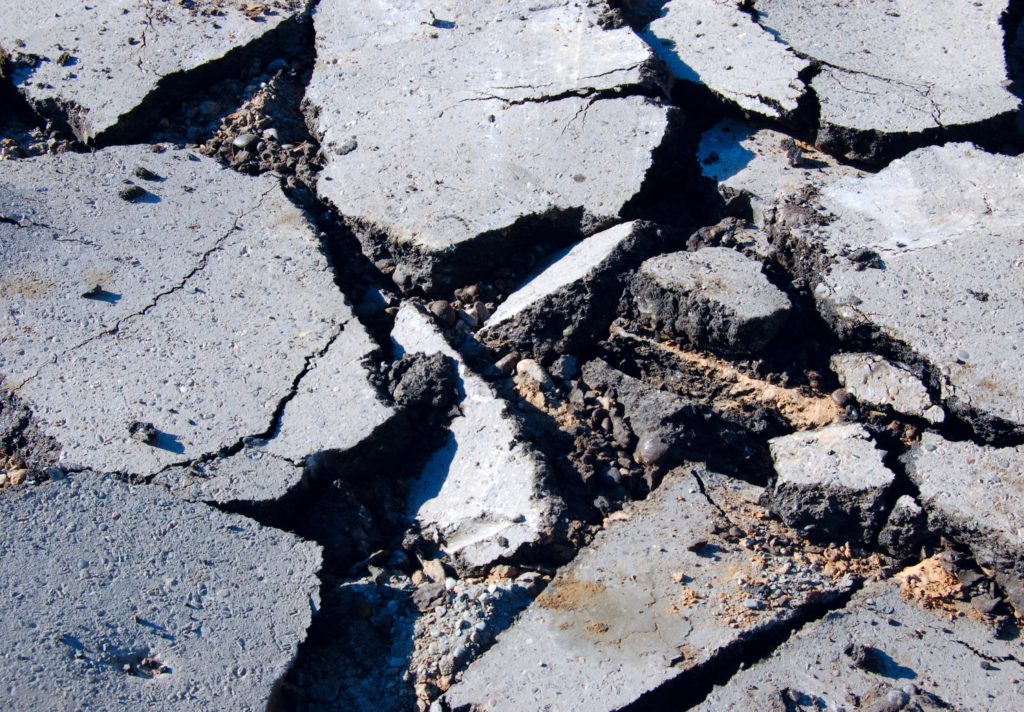
The Benefits of Commercial Parking Lot Resurfacing

It is pretty easy to tell if your commercial parking lot needs to be resurfaced. Has it undergone significant damage over a long period of time? Is your region known for heavy precipitation or inclement weather conditions? Can you see visual defects that reduce safety and performance of your pavement? How does your parking lot impact your current property value?  By answering yes to one or more of these questions, you can consider your lot a strong candidate for resurfacing.

Continue reading to learn what you need to know about resurfacing your parking lot, including the various benefits it can offer you now and in the long run.

Indianapolis Parking Lot Paving Repair
Indianapolis Parking Lot Repair 317-549-1833

Problems Posed By a Damaged Parking Lot

Damaged parking lots cannot really serve their purpose as intended. One of the most impactful issues with damaged parking lots is reduced curb appeal. Resale and property value will suffer if your commercial real estate does not meet basic consumer standards.

Another downfall of a damaged parking lot is reduced safety. As a commercial property, you are likely a common ground for guests, visitors, staff, and more. Whether they are on foot or in a car, you have a legal duty of care to ensure your premises is a hazard-free environment for them all. Damaged parking lots can pose a wide range of safety issues, including slip and fall accidents, car accidents, and even criminal activity since derelict parking lots tend to attract the wrong crowd.

In addition to reduced value and safety, a damaged parking lot cannot perform as it should in terms of being a transportation medium, as well as, water drainage, traffic control, and more. If a parking lot is uneven, cracked, crumbled, faded, full of potholes, or missing vital traffic signs, it can pose several performance issues for both pedestrian and driver.

Signs That Indicate a Need for Parking Lot Resurfacing:

⮊ Excessive Cracking
⮊ Large Gaps or Crevices
⮊ Crumbling Pavement
⮊ Potholes or Craters
⮊ Depressions or Heaves
⮊ Faded Pavement Markings
⮊ Faded Asphalt
⮊ Missing or Broken Traffic Signs
⮊ Broken or Cracked Bollard Posts
⮊ Broken or Faded Parking Curbs
⮊ Worn Sealcoat

Parking Lot Resurfacing Services

Parking lot resurfacing is a necessary routine maintenance that delivers a wide range of benefits, such as improved curb appeal and property value, higher level of safety, enhanced performance, and longevity. It will extend the like of your parking lot for years longer, therefore putting more money in your wallet in the long run. Services implemented for parking lot resurfacing include crack filling, pothole repair, sealcoating, road markings, bollard post repair, traffic sign installation, dumpster pad repair and installation, culvert repair, and for major renovations, overlays. In cases of extensively-damaged parking lots, repaving might be the most cost-effective choice.

Indianapolis Parking Lot Repaving Contractors

Call ACI Asphalt and Concrete at 317-549-1833 for commercial and industrial paving and repair service for parking lots in Indianapolis, Indiana. Our licensed and qualified paving contractors provide several Indianapolis asphalt and concrete paving services, including pavement repair, sealcoating, road work, commercial paving, industrial paving, winter cold patching, and more. We are the industry veterans to trust for skilled craftsmanship and competitive prices! Request a free estimate, today.