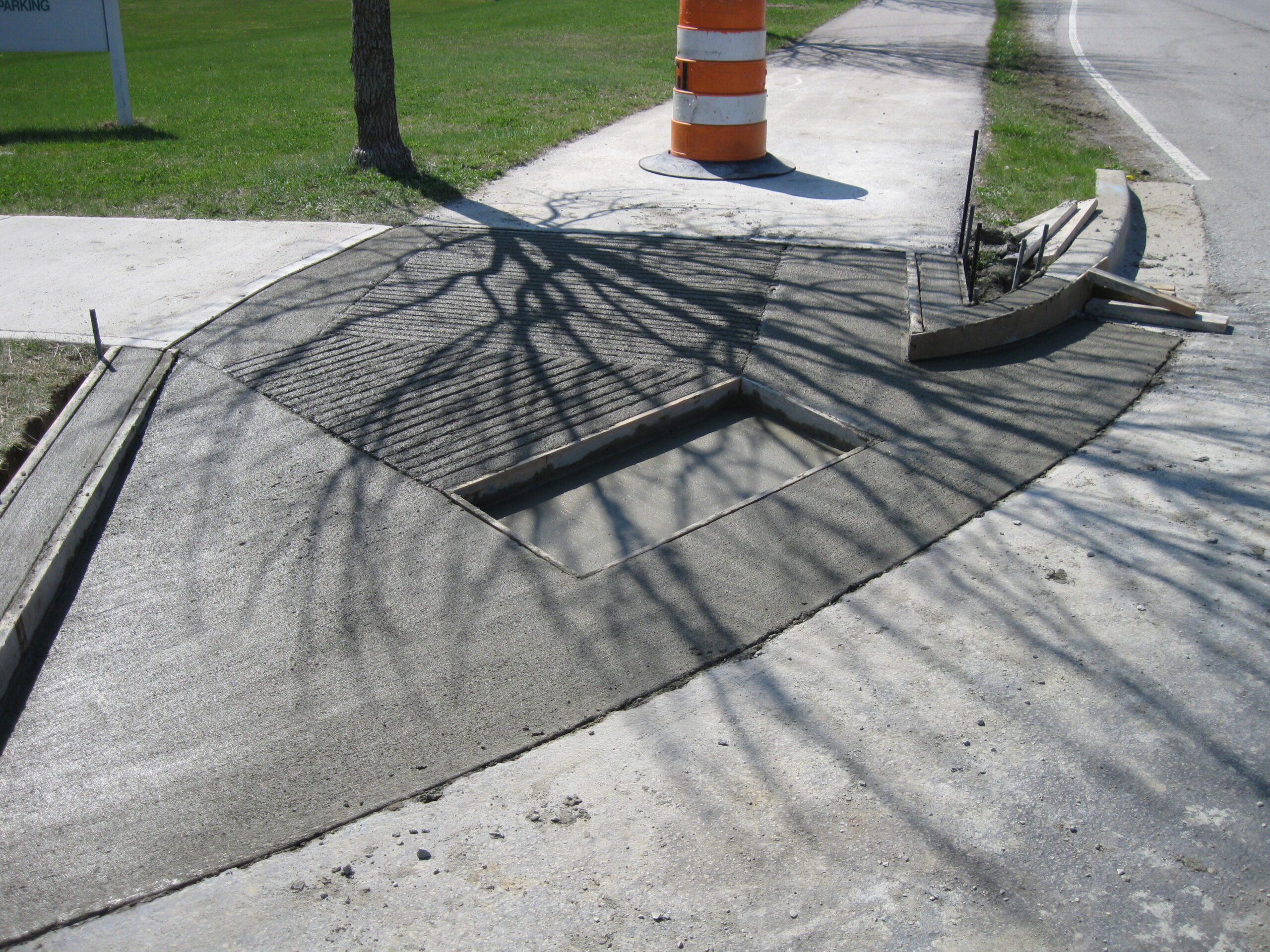
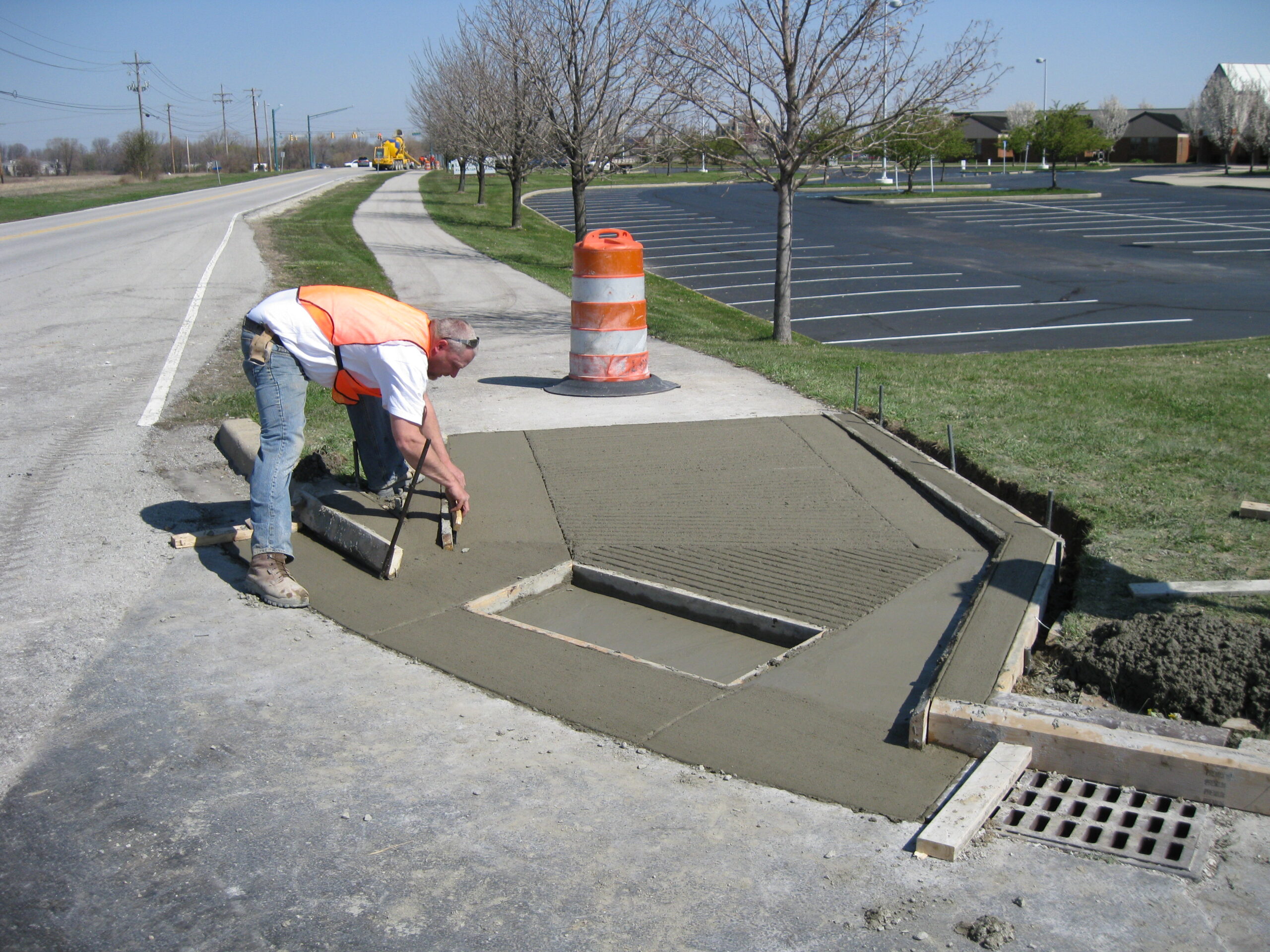
A customer trips on uneven pavement outside your front door. A delivery worker cuts across your parking lot with no clear path to follow. A visitor in a wheelchair can’t find an accessible route to your entrance. These aren’t hypothetical scenarios—they’re the kinds of incidents that happen on commercial properties every day, and they carry real consequences for business owners.
Adding a designated pedestrian walkway to your property is one of the most practical investments you can make. Done right, it protects people, reduces your legal exposure, and signals to customers that their safety matters. But there’s more to it than simply pouring concrete from point A to point B. From material selection to ADA compliance, several important considerations come into play before a single shovel hits the ground.
Why Pedestrian Walkways Are Essential for Your Business
The numbers make a strong case on their own. According to the National Council on Compensation Insurance (NCCI), the average compensation claim for a slip-and-fall injury was $51,047 as of 2022. Premises liability lawsuits can push settlements far higher—often into the $50,000 to $150,000 range for trip-and-fall cases on commercial properties.
Beyond the financial risk, a well-designed walkway improves the overall customer experience. Clear, safe paths make it easier for everyone—including elderly visitors, parents with strollers, and people with disabilities—to access your building comfortably. That kind of accessibility builds trust and keeps people coming back.
There’s also the matter of curb appeal. A clean, defined walkway gives your property a polished, professional appearance that reflects well on your business before a customer even walks through the door.
Planning Your Pedestrian Walkway Project
Before any materials are ordered, take time to assess your property carefully. Walk the site and observe how foot traffic naturally flows—where do people tend to walk? Where do pedestrians and vehicles currently share space? Identifying these patterns helps determine the most logical and safest placement for your walkway.
Determining Width and Placement
Width matters both for safety and compliance. The Americans with Disabilities Act (ADA) sets a federal minimum clear width of 36 inches, but most commercial properties require 42 to 48 inches or wider, depending on foot traffic volume and local code requirements. If your walkway narrows below 60 inches, ADA standards also require passing spaces—60 by 60 inches—at intervals no greater than 200 feet.
Placement should prioritize direct connections between high-traffic arrival points: accessible parking spaces, main entrances, loading areas, and public sidewalks.
Budgeting for the Project
Costs vary based on materials, site conditions, and project scope. Concrete installation for commercial walkways typically runs between $12 and $30 per square foot, while asphalt is often a more affordable option for certain configurations. Factor in drainage work, line markings, and any ADA ramp construction as part of your total budget. It’s also worth noting that small businesses may qualify for a federal tax credit of up to $5,000 per year under IRS Section 44 for accessibility improvements, with an additional deduction of up to $15,000 per year under IRS Section 190—potentially offsetting up to $20,000 in compliance-related spending annually.
Materials and Design Options
Choosing the right material depends on your property’s traffic patterns, climate, and budget.
Popular Walkway Materials
Concrete is the most common choice for commercial pedestrian walkways. It’s durable, long-lasting, and handles heavy foot traffic well. Concrete surfaces are also easier to maintain at ADA-compliant slopes over time.
Asphalt offers flexibility and affordability, making it a good option for larger walkway areas or properties that already use asphalt for parking lots and driveways. It’s also faster to install.
Permeable paving manages stormwater runoff by allowing water to pass through the surface rather than pooling. This can be a smart option for properties with drainage challenges or for businesses looking to meet environmental goals.
Design Considerations
ADA compliance isn’t optional—it’s a legal requirement with real enforcement teeth. Federal penalties for violations can reach $75,000 for a first offense and $150,000 for subsequent violations. More than 10,000 ADA Title III lawsuits are filed annually across the United States, making proactive compliance far less costly than reactive lawsuit defense.
Key design requirements include:
- Cross slope no greater than 2%—with zero tolerance for exceeding this measurement
- Running slope no greater than 5% (anything steeper is classified as a ramp, which triggers additional requirements)
- Trip hazard threshold of no more than ¼ inch vertical displacement at any joint or crack
- Curb ramps where the walkway meets a vehicular area, with a maximum slope of 1:12 (8.33%)
Drainage and weather resistance are also critical design factors, particularly for businesses in Indiana, where freeze-thaw cycles can cause concrete to heave and settle over time.
Safety Features to Include
A compliant surface is just the starting point. Several additional features make a walkway genuinely safe for all users.
Lighting is non-negotiable for any walkway that sees use after dark. Adequate illumination helps pedestrians identify hazards and deters security risks.
Non-slip surfaces reduce accident risk, especially in wet or icy conditions. Textured concrete finishes and anti-slip coatings are both practical options.
Clear markings and signage help direct pedestrians away from vehicle traffic zones. High-visibility paint, wayfinding signs, and detectable warning surfaces (truncated dome panels) at curb transitions all contribute to a safer, more legible environment.
Adequate width for wheelchair users isn’t just a compliance checkbox—it makes your property genuinely accessible to a broader range of customers and visitors.
Installation and Professional Guidance
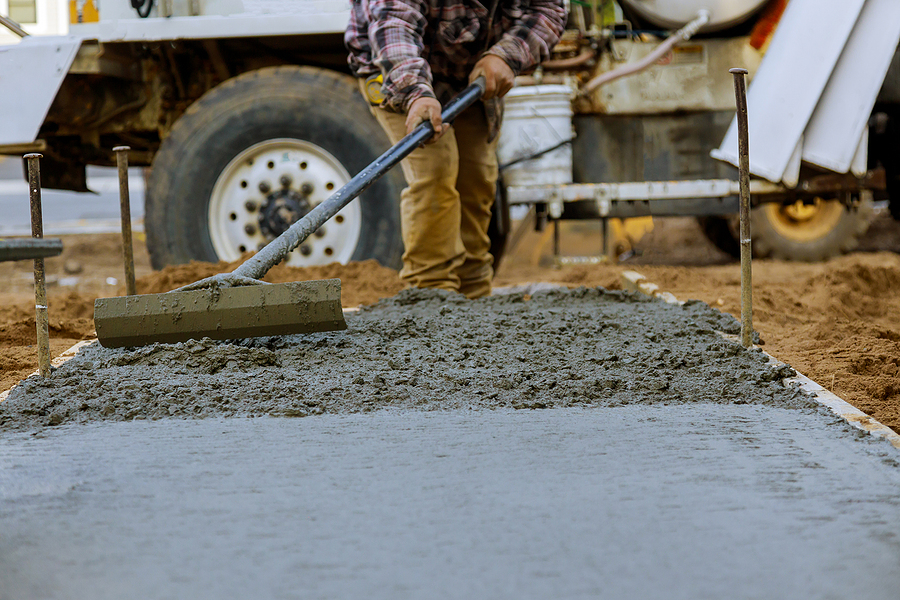
Pedestrian walkway installation on commercial properties isn’t a DIY project. Proper base preparation, slope grading, and drainage work require experience and equipment that most property owners don’t have on hand.
Hiring a qualified Indianapolis paving contractor ensures the work is done to code and built to last. A professional will assess existing site conditions, recommend appropriate materials, and handle the grading and compaction that determines long-term surface performance.
Minimizing Business Disruption
Timing matters. Work with your contractor to schedule installation during lower-traffic periods—early mornings, weekends, or between seasons—to reduce disruption to your customers and employees. A phased approach can keep at least partial access open throughout the project.
Maintenance and Long-Term Care
A pedestrian walkway is an ongoing responsibility, not a one-time installation. Concrete and asphalt both shift over time due to soil settlement, tree root pressure, and seasonal freeze-thaw cycles in Indiana.
Schedule regular pavement inspections—at least annually—to check for cracked surfaces, trip hazards above the ¼ inch threshold, faded markings, and any damage to detectable warning panels. Document your inspections with photographs and repair records. That documentation can be valuable evidence of good faith if a premises liability claim ever arises.
Seasonal maintenance is especially important in Indiana. Winter de-icing chemicals can degrade surface coatings, and spring thaw often reveals new settlement or cracking that needs attention before it becomes a safety hazard.
Frequently Asked Questions
How wide does a commercial pedestrian walkway need to be?
The ADA federal minimum is 36 inches, but most commercial properties should plan for 42 to 48 inches or wider. Always verify local code requirements in addition to federal standards.
Is asphalt or concrete better for a commercial walkway?
Concrete is generally preferred for pedestrian walkways due to its durability, long lifespan, and ease of maintaining ADA-compliant slopes. Asphalt is a cost-effective alternative in certain configurations, particularly for larger areas. Your contractor can recommend the best option based on your site conditions and budget.
How long does walkway installation take?
Most commercial walkway projects take one to several days depending on scope and site conditions. Concrete requires a curing period of several days before it can be opened to foot traffic.
Do I need a permit to install a walkway on my commercial property?
In most jurisdictions, yes. Commercial paving projects typically require permits, especially if they involve ADA ramp construction or connections to public sidewalks. A licensed contractor will be familiar with local permit requirements.
How often should I inspect my walkway?
At minimum, once per year—and after any significant weather event, freeze-thaw cycle, or nearby construction that could affect soil stability. Promptly repair any trip hazard exceeding ¼ inch to maintain both safety and compliance.
Put Safety First on Your Property
A well-built pedestrian walkway does more than check a compliance box. It protects your customers, reduces your liability exposure, and communicates that your business takes safety seriously—because it does.
If you’re ready to add or upgrade a designated pedestrian walkway at your commercial property in Indianapolis or Central Indiana, ACI Asphalt & Concrete is here to help. We provide professional sidewalk and walkway installation, ADA-compliant ramp construction, concrete and asphalt paving, and more—all backed by an A+ BBB rating and a commitment to getting the job done right. Request an estimate today.
Related Posts:
How to Modify a Parking Lot to Promote Pedestrian Safety
Ensuring Safety and Security: Top Tips for Parking Lot Management
Sidewalk Replacement Cost: Your Average Price Guide