Can Hot or Cold Weather Affect the Asphalt Paving Process?

Various technicalities are involved in the asphalt paving process, all of which require meticulous attention to detail. In order to get the best results, asphalt paving requires skill, training, knowledge, specialized equipment, high-quality base materials, and most importantly, satisfactory working conditions. This includes good sub-grade, drainage, base, and even climate. That’s right; if environmental conditions are not favorable, the overall quality of an asphalt paving project is at risk. Continue reading to learn how outdoor temperatures affect asphalt paving, and the best time of year to have your asphalt pavement installed.

Asphalt Concrete Paving 317-549-1833

Asphalt Concrete Paving 317-549-1833

Ambient Air and Base Temperatures

In order to get the best results for asphalt pavement installation, outdoor temperatures must be warm enough. And not just the temperature of the air, but of the base too. The base includes the lower aggregate, soil, and existing asphalt material. Both cold air and cold ground can deliver inferior asphalt paving results, and for many reasons. If the air or base is too cold, the asphalt will dry too quickly, which reduces compaction, density, and longevity of the pavement. Cooling too quickly causes it to unravel and fall apart, which leaves behind rough and rocky surfaces. An asphalt pavement in this condition cannot thrive long, as it will retain water and continue to atrophy at a rapid pace.

Another reason why cold temperatures can deliver poor paving results are sealcoats. Asphalt requires sealcoating as an added preventative maintenance against wear and tear and to retain its strength and durability over time. And in order for sealcoat to cure properly, it requires both sun and warmth. Base and air temperatures below 50 degrees Fahrenheit are risky conditions for asphalt installation.

For these reasons and more, it is recommended for the outdoor air temperatures to be at least 65 to 70 degrees Fahrenheit, and ground temperatures to be at least 60 degrees Fahrenheit, for the best asphalt paving results. Be sure to hire an experienced pavement contractor for reliable asphalt paving services you can trust. They have the resources, training, and experience to deliver quality results in a convenient time-frame.

Indianapolis Asphalt Paving

Asphalt Concrete Repair

Asphalt & Concrete Service 317-549-1833

Call ACI Asphalt and Concrete Inc. at 317-549-1833 for professional asphalt repair and installation in Indianapolis, Indiana. Owner, Lindsey Lewis, and his team of licensed pavement contractors, are happy to answer your questions about asphalt paving installation and repair. We offer a wide range of commercial and industrial paving services, including sealcoating, winter cold patching, pothole repair, and more.

What Makes Asphalt a Good Paving Material?

Asphalt is a popular paving material because it is a good paving material. Its various attributes make it effective, and its quality makes it a first-choice for many building and construction applications. Asphalt delivers several benefits in terms of function, longevity, durability, maintenance, and cost-savings, which is why it is the most commonly-used material for paving roads, streets, interstates, highways, parking lots, driveways, and much more. Continue reading to learn more about the advantages of asphalt and why it’s used in so many industries.

Asphalt Concrete Paving 317-549-1833

Asphalt Concrete Paving 317-549-1833

Performance and Longevity

Asphalt is a composite material made up of a combination of aggregates, binders, and other additives. It is strong and durable, so it can withstand inclement weather, harsh chemicals, and heavy traffic. It is also water-resistant, which reduces cracking and other freeze-thaw related surface damages. Because asphalt is strong, durable, and resistant to wear and tear, it lasts for years. Not only does this reduce the need for repairs and replacements, it makes the maintenance load much lighter.

Installation and Maintenance

Asphalt is flexible, making it easy to work with. And since it is strong and durable, very little maintenance is needed to keep it in good condition. A quality seal coat, routine sweeping, and prompt crack repairs are the most important parts of asphalt maintenance. Also, the groundwork and foundation preparation work for asphalt is much easier than its outdated alternatives. This reduces labor time, thus reducing installation costs.

Cost

The attributes of asphalt make it a cost-effective material for various paving projects. Although a notable upfront cost, asphalt saves money in the long run. Reduced repairs and installation times combined with all the added conveniences of asphalt make up for the initial investment. Just keep in mind that it will likely need re-seal-coating every 3 to 5 years. This will also keep maintenance low, repairs at bay, and protect your investment.

Indianapolis Asphalt Paving

Asphalt & Concrete Service 317-549-1833

Asphalt & Concrete Service 317-549-1833

Call ACI Asphalt and Concrete Inc. at 317-549-1833 for asphalt repair in Indianapolis, Indiana. Owner, Lindsey Lewis, and his team of professional pavers, are licensed, bonded, and insured, and have more than 30 years of experience in the paving industry. We offer commercial, industrial, and municipal asphalt paving services at the most competitive prices in town. Call 317-549-1833 to request an estimate for Indianapolis asphalt paving, today.

5 Types of Latex Additives Used in Asphalt Sealcoats

Asphalt pavement retains excellent waterproofing and aggregate-binding properties, making it ideal for roads, parking lots, driveways, and more. But without a proper sealcoat, asphalt pavements are vulnerable to surface damage from inclement weather, chemicals, gasoline, oil, salt and more. For this reason, sealcoating is a critical step toward protecting the structural integrity, function, and longevity of asphalt pavement. One of the most effective methods for enhancing the overall performance and quality of sealcoats is to use additives.

Asphalt Concrete Paving 317-549-1833

Asphalt Concrete Paving 317-549-1833

Sealcoat Latex Additives

Various assortments of latex additives are formulated using polymers, rubbers, and emulsions. Here are 5 popular types of sealcoat latex additives:

Acrylic polymers and Copolymer-Based Additives

These acrylic sealcoating additives are used for their thickening and fast-drying qualities. They are also used for enhanced sand and aggregate suspension. Acrylic additives are resistant to surface contaminants like oil, fats, hydrocarbon solvents, and other damaging lubricants. They are also resistant to ultraviolet rays.

Acrylonitrile-Butadiene Rubber (NBR) Polymer-Based Additives

Acrylonitrile-butadiene rubber additives are primarily used for rubberizing refined coal tar and asphalt-based sealcoats. They retain a strong chemical resistance to surface contaminants like fats, oils, solvents, hydraulic fluids, gasoline, kerosene, and most other chemicals.

Chloroprene (Neoprene) Polymer-Based Additives

Chloroprene polymer-based additives are used in seal coatings because they have a high-resistance to many chemicals and mild acids, including oil, gasoline, and some solvents. For this reason, they are used primarily in industrial compositions in gaskets, rubber sheeting, adhesives, and more.

Polyvinyl Acetate and Acrylic Copolymer-Based Additives

Just like acrylic polymer additives, polyvinyl acetate and acrylic copolymer additives are primarily used for sand and aggregate suspension, quick drying, and thickening qualities. But, these additives retain a weakened resistant to UV radiation and water, as well as, gasoline, kerosene, oils, fats, salts, and more.

Styrene Butadiene (SBR), Natural Rubber (NR) and Butyl Rubber (BR) Based Additives

All of these sealcoat additives have the improved ability to withstand water, as well as, moderate chemical contaminants, such as organic acids, alcohol, and some solvents. However, they are widely used for their attributes in sand and aggregate suspension, faster drying, and thickening.

Indianapolis Asphalt Sealcoating

Asphalt Concrete Repair

Asphalt & Concrete Service 317-549-1833

Call ACI Apshalt and Concrete Inc. at 317-549-1833 for exceptional asphalt sealcoat services in Indianapolis, Indiana and its surrounding locations. Owner, Lindsey Lewis, and his team of licensed, bonded, and insured pavers, are eager to answer your questions about asphalt and concrete sealcoats and more. Call 317-549-1833 to request an estimate for Indianapolis asphalt sealcoating, today.

Why Can Soil Become Unstable Below Old Asphalt?

Often times, paving companies or contractors will begin a paving project, only to find that the soil beneath the old pavement is too soft and not stable enough to take on new material. There are a few common causes for soil instability, all of which can interrupt a paving project. But fortunately, unstable soil can be resolved. It just takes a few extra steps. Continue reading to learn what causes soil instability, and how to fix it for purposes of paving.

Asphalt Concrete Paving 317-549-1833

Asphalt Concrete Paving 317-549-1833

Causes of Soil Instability

There are three main causes of soil instability: 1) organic presence, 2) lack of compaction, and 3) poor composition. Look below for a brief explanation of each issue.

Organic Presence – The excessive presence of organic matter, especially decomposing organics, can cause soil to soften, making it unstable. This includes insects, leaves, plant matter, and water.

Poor Compaction – When soil lacks compaction, it is weak and does not retain the ability to properly bear weight. Lack of compaction means soil is soft and unable to stabilize for the purpose of bearing weight, such as paving material.

Poor Composition – The make-up of soil has a major influence on its level of stability. When improper levels of essential minerals, namely air, water, and organic matter, are present in soil, it lacks the ability to be strong. Soil needs just the right amount of moisture, matter, and air to be stable for paving.

Paving Over Soil

You cannot add new asphalt paving material on top of an unstable foundation. And soft soil is unstable. Instead, new asphalt paving solutions need to be considered and chosen. Most of the time, soft soil can be resolved, and once they are, paving projects can continue as planned. Various methods for treating soil instability have proven effective, either on their own or in combination with each other. They include practices such as:

Using drainage tiles to remove excess moisture from soil.

Excavating the soft soil and replacing it with a proper base material.

Tilling and turning the soil to encourage drying or hardening.

Using soil separation fabrics to prevent soil from intermixing with base materials.

Using reinforcement grids (geo grids) to even out the weight of the load.

Tilling chemical stabilization into the soil to change the composition to make it stronger.

Applying foam asphalt injections to mimic the characteristics of pavement.

Indianapolis Paving Contractors

Asphalt Concrete Repair

Asphalt & Concrete Service 317-549-1833

Call ACI Asphalt and Concrete Inc. at 317-549-1833 for professional pavement repair and installation in Indianapolis, Indiana and its surrounding counties. Owner Lindsey Lewis, and his team of licensed paving contractors, provide a wide range of asphalt and concrete paving services for commercial, industrial, and municipal properties throughout the state. As highly-trained and experienced pavers, you can trust us for quality service at an honest price. Call 317-549-1833 to
request an estimate for Indianapolis
paving services
, today.

3 Cost-Effective Methods for Pot Hole Repair

Pothole Repair Indianapolis 317-549-1833

Pothole Repair Indianapolis 317-549-1833

It is common for asphalt to breakdown, weaken, crack, or crumble. These effects happen as a result of normal, everyday wear and tear from traffic and weather, as well as, improper sealcoating, paving, and more. Pot holes, also known as chuck holes, are one of the damaging effects that results from asphalt deterioration. They can range in size, depth, and shape, and fluctuate in expansion rates depending on a variety of factors. And pot holes will only continue to expand and worsen until they are repaired.

The umbrella method for pot hole repair is asphalt patching. This process can be accomplished using three different methods. The method used will depend on several variables. Continue reading to learn what these methods are, and who to talk to when you need asphalt pot hole repair for your property.

Types of Pothole Repair

Regardless of how you choose to have your property’s potholes repaired, it is important to do it as soon as possible. This is because pot holes tend to get worse, and they will continue to get bigger and wider as time goes on. The three main methods for pothole repair include hot asphalt mix, cold asphalt mix, and polyurethane asphalt mix. These are all cost-effective and efficient methods for repairing and patching pot holes in asphalt. Look below for a brief description of each process.

Cold Asphalt

Cold asphalt is mixed and poured at a lower temperature than other asphalt mixes, but its lifespan is not as long. After the pothole is cleaned, the cold asphalt mix is poured inside, compacted, and left to cure. It is easy to work with and low in cost.

Hot Asphalt

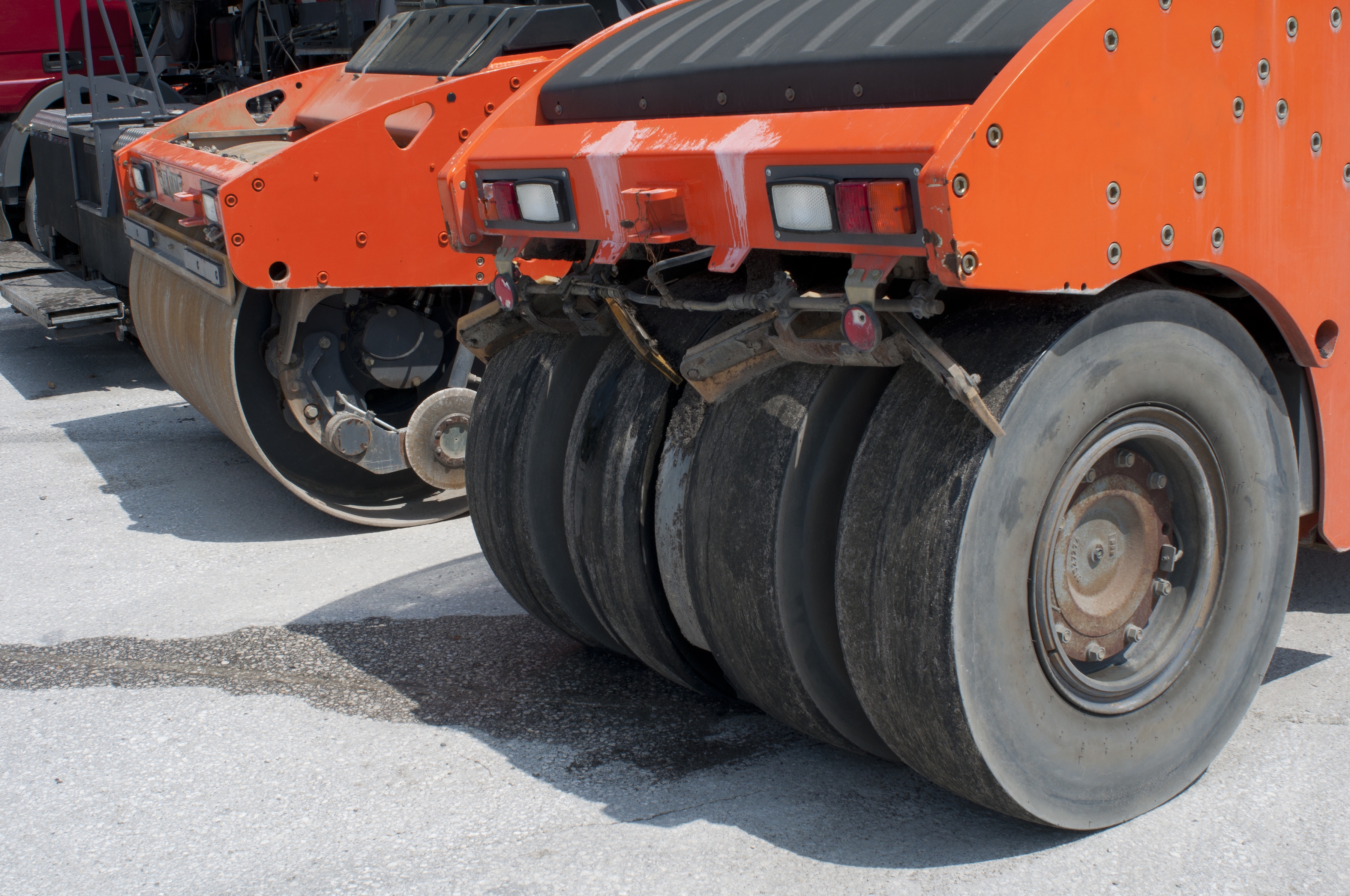
Hot asphalt is a common choice for larger-scale pothole repairs because it is less available in smaller quantities. It is mixed and poured at an average temperature of 350 degrees Fahrenheit. Compaction by must be completed before it cools, and should be carried out by a heavy pavement roller. Hot asphalt lasts longer than cold asphalt, yet still cost-effective for the average property owner’s budget.

Polyurethane Asphalt

Polyurethane asphalt is customary option for pot hole patching because they last a long time, which is cost-effective for property owners. So long as the asphalt mix can be properly dried, it can be used all year round, in any season. After the polyurethane is mixed and spread in the hole, it is compacted and covered with topping sand. This makes its ready for use in as little as one hour!

Indianapolis Pothole Repair

Asphalt Concrete Repair

Asphalt & Concrete Service 317-549-1833

Call ACI Asphalt and Concrete Inc. at 317-549-1833 when you need prompt and professional pothole repair in Indianapolis, Indiana. Owner, Lindsey Lewis, offers a wide range of paving services for commercial, industrial, and municipal properties, and all at the most competitive prices in town. Call 317-549-1833 to speak with a friendly company attendant about our Indianapolis pot hole repair services, today.

Common Asphalt Concrete Mixture Formulations

The term “asphalt concrete” refers to a composite material used to pave roads, streets, parking lots, and airports. In the states, it is also known as blacktop, pavement, or simply, asphalt; but in Great Britain and parts of Europe, it is known as tarmac or bitumen macadam. Asphalt concrete (AC) mostly consists of mineral aggregates that are bound by liquid asphalt and laid and compacted in layers. The abbreviation “AC” generally stands for asphalt concrete, but can also signify “asphalt content” or “asphalt cement” in regards to the liquid asphalt portion of the material. And in the engineering and construction industries, AC is commonly referred to as asphaltic concrete or bituminous asphalt concrete.

Asphalt Concrete Paving 317-549-1833

Asphalt Concrete Paving 317-549-1833

Asphalt and Aggregate Mixes

There are many methods to mixing asphalt and aggregate materials. Depending on its application, examples of such mixes include hot asphalt concrete, warm mix asphalt concrete, cold mix asphalt concrete, cut-back asphalt concrete, mastic asphalt concrete, and natural asphalt concrete. Take a look below for a brief overview of each mixture formulation for asphalt and aggregate materials.

Hot Asphalt Concrete (HMCA) – Asphalt binder is heated to decrease viscosity, and prior to mixture, the aggregate is dried to remove any moisture. Depending on the type of asphalt used (either polymer-modified or virgin), mixing temperatures range between 300 and 330 degrees Fahrenheit (150-166 &;C). This mixture is used most often for high-traffic pavement such as interstates, racetracks, airfield landing strips, and more. But it is also used as an environmental liner for reservoirs, ponds, and landfills.

Warm Asphalt Concrete (WMA) – It is produced by adding certain materials to the asphalt binder prior to mixing, such as waxes, asphalt emulsions, zeolites, and occasionally water. This formulation provides lower laying and mixing temperatures. This results in reduced fossil fuel consumption, which in turn releases less vapors, aerosols, and carbon dioxide.

Cold Asphalt Concrete – It is produced by emulsifying asphalt in a mixture of cleanser and water prior to mixing. This makes the mixture less viscous and easier to manipulate. It is commonly used to patch holes and cracks on low-traffic pavements.

Cut-Back Asphalt Concrete – Asphalt binder is dissolved in kerosene (or some other light version of petroleum) prior to mixing. Just like cold asphalt concrete, this makes the mixture less viscous and easier to work with. With the growing concerns of VOC’s, cut-back AC has been mostly replaced by asphalt emulsions.

Mastic Asphalt Concrete – Also called “sheet asphalt”, is produced by heating oxidized, hard-grade, blown bitumen in a mixer until thick. Then aggregate mix is added to it.

Natural Asphalt Concrete – Produced from bituminous rock. Bituminous rock is found only in certain parts of the world where the surface of porous sedimentary rock has been permeated with upwelling bitumen.

ACI Asphalt and Concrete Inc.

Asphalt  & Concrete Service 317-549-1833

Asphalt & Concrete Service 317-549-1833

Call ACI Asphalt and Concrete Inc. at 317-549-1833 for commercial asphalt paving service in Indianapolis, Indiana. Owner, Lindsey Lewis, is happy to answer your pavement question anytime. Our licensed, bonded, and insured pavers have decades of experience providing a wide range of asphalt and concrete services for commercial, industrial, and municipal properties throughout the state. Regardless of your projects scope or size, we are fully-equipped and trained to deliver quality results in a convenient time frame. Call 317-549-1833 to speak with a knowledgeable contractor about Indianapolis pavement installation and repair, today.

Learning About Road Surface Markings

We drive over them, alongside them, behind them, and we obey them. Surface stripes and pavement markings serve a very important purpose in traffic and road systems, and play a major role in the organization, functionality, and safety of drivers and pedestrians. But many drivers are unsure about the different colors, applications, and meanings behind the most common pavement stripes and markings. It is important to know this information so you can be safer on the road. To improve your driving acumen and security, continue reading to learn about pavement stripes and marks.

Asphalt Concrete Paving 317-549-1833

Asphalt Concrete Paving 317-549-1833

Road Stripes and Markings

Road surface markings and striping is any material or device used to assist or convey official information to motorists and pedestrians. They are either mechanical, non-mechanical, or temporary, and used in several applications, including parking lots, roads, highways, toll booths, school zones, pedestrian crossings, and more. And today, there are new innovative technologies available for road marking systems, such as retro-reflectivity, that lasts longer and costs less to apply. So we can count on reliable traffic and pedestrian surface markings for years to come. Below is a review of some common road markers, and the purpose they serve.

Mechanical Markers

Botts’ Dots – A type of mechanical non-reflective marker that is raised off the ground in the form of small mounds, or “dots.” They are used to indicate the edges of traffic lanes and are commonly used in combination with raised reflective markers. Botts’ dots are also used to alert motorists of highway toll booths, school lanes, and speed limit reductions. Since they are easily damaged by snow plows, they are usually used in areas with warmer climates.

Rumble Strips – If you have ever accidentally veered off the road, then you have probably experienced driving over rumble strips. They are repetitive troughs carved into the pavement (generally 1 cm deep and 10 cm wide) on the edges of roads to alert or awake drivers that are falling asleep or not paying attention. When you drive on rumble strips, your vehicle shakes and vibrates as it moves over the deep ridges.

Raised Reflective Markers – Also called road studs, these markers are reflective, making them more visible at night and in poor weather. They are raised off the ground, usually in the form of dots or small squares, and used as travel lane dividers, median markers, exit slip-road markers.

Non-Mechanical Markers

Paint – The most common form of non-mechanical road markers is paint, sometimes containing retroreflective glass beads. The primary colors of road paint depend largely on locality, but generally include white, yellow, red, blue, and orange. Paint markers are used for a wide variety of purposes in terms of road systems and pavement, including driving lanes, parking lots, handicap parking, no-parking zones, time-restricted parking, loading zones, and much more.

Yellow Lines – Yellow lines are used to mark the center of two-way streets that have two-way traffic lanes. If the center yellow lines are dashes instead of solid lines, you can pass on a two-way street with two-way traffic. However, if they are solid, you cannot. So this means you cannot drive to the left of these lines.

White Lines – White lines are applied in the center and on the shoulder of a two-lane road to advise traffic traveling in your direction. If the lines are solid, you cannot legally pass on the road. If they are broken up into dashes, you can legally pass other vehicles if the way is clear.

ACI Asphalt and Concrete Inc.

Parking Lot Paving Indianapolis Indiana

Indianapolis Paving 317-549-1833

Call ACI Asphalt and Concrete Inc. at 317-549-1833 for professional pavement installation and repair in Indianapolis, Indiana. Owner, Lindsey Lewis, and his team of licensed and insured pavers, are fully-equipped to manage any size pavement application or installation project for commercial, industrial, and municipal properties. We provide road striping services, as well as, pavement repair, pavement installation, pothole patching, and more. Call 317-549-1833 to speak with a knowledgeable Indianapolis paving contractor, today.

Thicker is Not Better When it Comes to Asphalt Sealer

Without a sealcoat, your pavement will quickly become dry and brittle, which will eventually result in cracks, crumbling pavement, discoloration, and many other damages. Sealcoating asphalt pavement costs pennies per square-foot, yet repairing asphalt pavement costs dollar per square-foot. So you can see that preventative maintenance is more cost-effective. Continue reading to learn how to properly assess your sealcoating needs, and why thicker sealcoat does not necessarily mean it is better.

Commercial Sealcoating 317-549-1833

Sealcoating Benefits

A paved driveway or parking lot is an important investment. And in order to maintain and protect your investment, routine asphalt care is required. One part of routine asphalt maintenance is sealcoating. Sealcoating delivers an attractive, crisp look, and is a critical component to preserving the function and stability of asphalt pavements. Not only does regular sealcoating protect against water penetration, it also protects against sun damage and chemical erosion.

More Reasons to Seal Coat:

• Prevents Water Penetration
• Protects Against Harmful UV-Rays
• Resistant to Oil and Chemical Spills
• Protects Against Premature Cracking and Erosion
• Enhances Appearance
• Increase Longevity and Stability

Although sealcoating is the right choice for your asphalt pavement, choosing to sealcoat is only half the process. For the best results, you must also ensure that the sealcoating work is carried out correctly. Improper sealcoating is one of the most common issues behind failing asphalt pavement. And one of the most common mistakes made during the sealcoating process is using too much product.

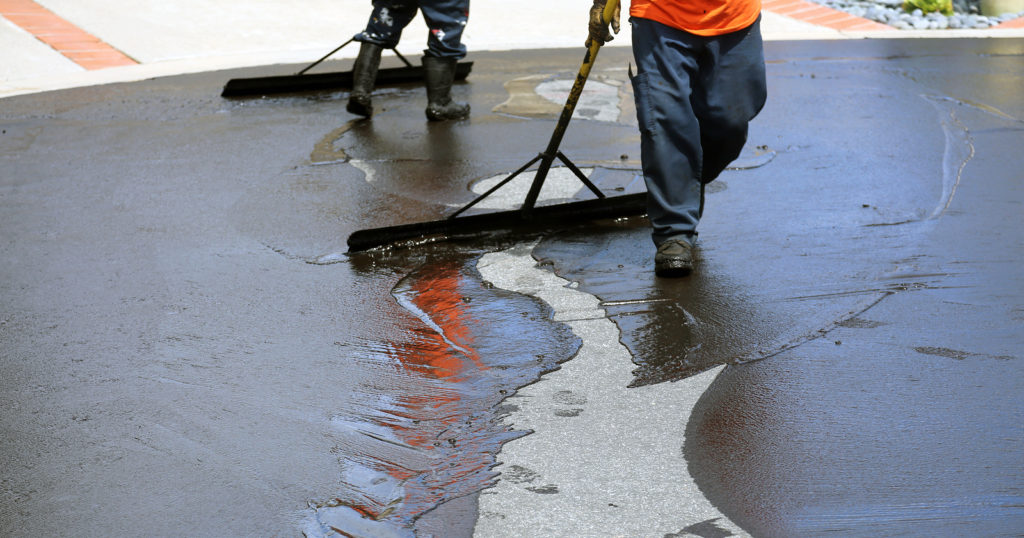
When it comes to sealcoat, thicker is never better. In fact, it is a bad idea. You can tell when pavement has excessive layers of sealcoat if it looks like it has no texture at all, and asphalt should always have texture. If it’s too smooth and has no visible dynamic, then the pavement is over-sealed. Not only does too much sealcoat take too long to cure, it doesn’t cure properly, resulting in unevenness and irregularity. It can also lead to surface cracks and track marks.

Commercial Sealcoating Services in Indianapolis

Call ACI Asphalt and Concrete at 317-549-1833 for professional asphalt sealcoating in Indianapolis, Indiana and its surrounding locations. Our licensed road construction contractors provide a wide range of asphalt and concrete work for commercial and industrial properties, including inspections, installation, replacement, repair, and more. We also offer free estimates and consultations, flexible scheduling, references upon request, and more. Best of all, our work is backed by our 100% Satisfaction Guarantee, so you can rest assure that your investment is sound. Request a free quote, today.

Why is Proper Pothole Repair So Important?

Potholes are foe to every driver, property owner, and pedestrian alike. Not only can they cause damage to our vehicles, they can reduce property value, compromise company profit, and even pose safety hazards. The short message here is that potholes are no good and should be repaired as soon as possible. In most cases, pothole repair is not a recommended “do-it-yourself” project.

Continue reading to learn why accurate pothole repair is so vital, and who to call for commercial paving services you can trust.

Pothole Origins

Potholes are created as a result of many factors. The most common factors are freeze-thaw cycles. When it rains or snows, water enters the pores and cracks within the pavement. The cycle of contracting and expanding in the pavement causes it to weaken overtime. And with ongoing traffic and inclement weather, the vulnerable pavement will begin to wear away, eventually collapsing and forming a hole.

Pothole Repair

The process of repairing and stabilizing deteriorated pavement is complex, and retains methods and techniques that differ slightly depending on several factors. From weather conditions to water drainage, there are many aspects to consider before filling-in or patching-up a pothole. Proper pothole repair is critical in order to protect your investment and achieve the long-lasting pavement stability you desire.

There are two common methods for repairing a pothole. Depending on certain factors, a pothole will require a temporary patch or a semi-permanent repair. Temporary pothole patching often involves a process known as “throw and roll.” It starts filling a pothole with hot or cold asphalt patching material, and then compressing it down manually (hand tamping) or with a paving vehicle. This option is more efficient and less expensive.

Semi-permanent pothole repair is a little more labor intensive since it requires adequate debris removal first, and then pavement cutting to achieve straight, even edges. Once a clean shape is achieved, a hot or cold asphalt paving material is poured inside and then compacted with a roller or vibratory plate.

Pothole Prevention

Pothole prevention starts with a trusted paving company that knows how to assess an area and provide proper pavement installation, taking into consideration sub-grades, water drainage, risk factors, and more. If pavement is not installed and laid properly, it will immediately show signs of defects and instability. Improper pavement installation will surely lead to an increase in pothole formation, and costly pothole repair.

Commercial Pothole Repair Services in Indianapolis

Call ACI Asphalt and Concrete at 317-549-1833 for commercial pothole repair in Indianapolis and its surrounding areas. Our licensed road construction contractors provide a wide range of asphalt and concrete work for commercial and industrial properties, including inspections, installation, replacement, repair, and more. We also offer free estimates and consultations, flexible scheduling, references upon request, and more. Best of all, our work is backed by our 100% Satisfaction Guarantee, so you can rest assure that your investment is sound. Request a free quote, today.

What Causes Fatigued Cracking in Asphalt?

A scattered series of interconnected crack lines in pavement is called fatigued cracking. The structural failure of an HMA (hot asphalt mix) surface or stabilized base is generally caused by repetitive loading and heavy traffic. There are several reasons why asphalt pavement can be affected and damaged in this way, all of which involving inadequate structural support.

Continue reading to learn more about fatigue cracking in pavement, and who to call for professional paving repair service you can trust.

Indianapolis Asphalt Repair
Indianapolis Asphalt Repair 317-549-1833

Thin Pavements

In thinner pavement, the bottom of an HMA layer is where the flexible stress is the highest. Fracturing begins here, and then spreads to the surface in the form of longitudinal cracks. This type of cracking is also known as “classical” or “bottom-up” fatigue cracking.

Thick Pavements

In thicker pavements, the top layers have the highest tensile stress levels due to tire activity, asphalt-binder aging, and other types of wear and tear. For this reason, fatigued cracking usually begins at the top. This form of fatigued cracking is called “top-down” cracking.

Causes

As mentioned, inadequate structural support is the umbrella cause for fatigued asphalt cracking. Inadequate construction, structural design, compaction, drainage, and more are just a few common examples that lead to the formation of fatigue cracks. Other possible causes include a decrease in sub-grade support or base stability from water infiltration and freeze-thaw cycles. It can also occur from improper stripping on the bottom HMA layers.

Solutions

The formation of fatigued cracking is unique and easily distinguishable. Many agree it somewhat takes on the appearance of alligator skin or distressed leather. To be sure, it is important to have a professional paver assess the cracking in your asphalt pavement to accurately diagnose the damage, identify the cause, and implement safe and effective solutions. This process involves digging a hole or pit to evaluate the structural makeup of the pavement. This method also helps determine if subsurface moisture is contributing issue. Fatigued cracks cannot simply be sealed as a means of repair. Instead, they must be patched or overlaid, depending on their size.

Commercial Asphalt Maintenance and Repair in Indiana

Call ACI Asphalt and Concrete at 317-549-1833 for professional asphalt maintenance and repair in Indianapolis, IN and its surrounding locations. Our licensed road construction contractors provide a wide range of asphalt and concrete work for commercial and industrial properties, including inspections, installation, replacement, repair, and more. We also offer free estimates and consultations, flexible scheduling, references upon request, and more. Best of all, our work is backed by our 100% Satisfaction Guarantee, so you can rest assure that your investment is sound. Request a free quote, today.